
Introduction
Ca-HMB, or calcium beta-hydroxy-beta-methylbutyrate, has emerged as a cornerstone ingredient in fitness supplements, revolutionizing how brands approach muscle health formulations. This naturally occurring metabolite of the essential amino acid leucine offers dual action—stimulating muscle protein synthesis while inhibiting breakdown—making it invaluable for sports nutrition brands, clinical nutrition companies, and supplement manufacturers targeting both athletic and aging populations.
As procurement managers and product developers seek scientifically validated ingredients with clear efficacy data, understanding this compound's biochemical advantages, sourcing considerations, and application versatility becomes essential for building competitive product lines in the global supplement market.
Understanding Ca-HMB and Its Role in Fitness Supplements
The Chemical Nature of Calcium Beta-Hydroxy-Beta-Methylbutyrate
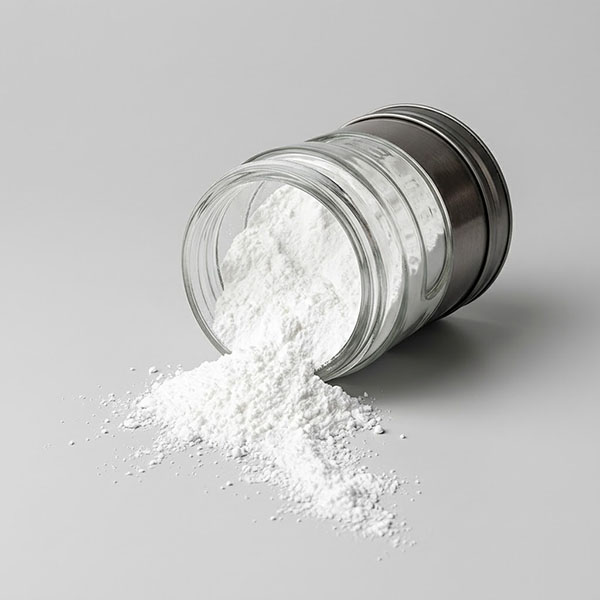
Calcium beta-hydroxy-beta-methylbutyrate is the stable calcium salt form of HMB. It solves important formulation problems that its free acid predecessor had. The body makes a small amount of HMB naturally by breaking down leucine (about a 5% conversion rate), but taking supplements skips this less-than-ideal process. The calcium chelation stabilizes the molecule, yielding a white crystalline powder with almost no odor. This is very different from HMB free acid, which is a strong, thick liquid that makes it harder to package and flavor finished products.
Biological Mechanism: The mTOR Pathway and Protein Turnover
The chemical works by sending signals to two different molecules. Researchers have found that it increases the activity of the mTOR pathway, which is the main switch for building muscle. In the same time, it lowers the activity of the ubiquitin-proteasome system, which breaks down muscle proteins.
This two-way effect makes it easier for muscles to grow, which is especially helpful when calories are limited, training is hard, or muscle loss comes with getting older. The bioavailability profile shows that plasma concentrations rise between 60 and 120 minutes after intake. The calcium salt form shows prolonged release, while free acid variants show a fast spike-and-crash pattern.
Dosage Standards and Safety Profile
The scientific community agrees that 3 grams a day is the right amount for people, usually split up into doses that are taken at different times, like before or after exercise. GRAS (Generally Recognized As Safe) status is given to the compound in the US because toxicological studies have shown that it is safe at high doses. People who work in procurement should know that requirements for purity of ≥98–99% are common for pharmaceutical and premium supplement uses, and HPLC proof is the best way to make sure an assay is correct.
Key Benefits of Ca-HMB for Muscle Growth and Recovery
Evidence-Based Muscle Synthesis and Anti-Catabolic Effects
A lot of controlled studies show that taking supplements and doing strength training together can help you gain a lot of lean muscle. A review of 15 studies found that, compared to control groups, treatment groups gained an average of 0.5 to 1 kg of lean body mass over 4 to 8 weeks.
During cutting stages or caloric deficits, when muscle maintenance is very important, the anti-catabolic traits of Ca-HMB come in very handy. Some athletes who do a lot of training report lower amounts of markers of exercise-induced muscle damage, such as creatine kinase and lactate dehydrogenase, which suggests that they heal faster, and these effects are often linked to supplementation with Ca-HMB.
Application in Specialized Demographics
In addition to bodybuilders, the ingredient helps with sarcopenia, which is muscle loss that comes with getting older and can affect a person's metabolic health and ability to move around. Clinical nutrition businesses make medical foods with this ingredient, vitamin D, and protein complexes to help cancer patients heal from surgery and deal with weight loss. This variety of demographics lets brands put their goods in areas like healthy aging, athletic performance, and clinical intervention, which means they can reach more people.
Comparative Positioning Against Creatine and BCAAs
This leucine metabolite targets protein turnover balance through different pathways than creatine monohydrate, which builds up phosphocreatine stores for explosive power output. BCAAs help make proteins, but they don't have the signaling qualities that make Ca-HMB useful, even when leucine is present in large amounts in the food. Formulation teams are putting these ingredients together in "all-in-one" healing matrices more and more because they know that they work together to help energy systems, protein balance, and cellular water all at the same time.
Procurement Considerations: How to Select and Source Ca-HMB Supplements
Product Form Factors and Packaging Options
Bulk powder is still the most common way for businesses to buy things, and it comes in 25 kg fiber drums with double plastic shells and desiccant packs as standard. Because it is hygroscopic, it needs to be stored below 40% relative humidity to keep it from caking and deliquescence. Suppliers who offer nitrogen-flushed packaging make products last longer on the shelf, and when stored properly, they can usually be used for 24 to 36 months. When making encapsulated or pill forms, you need to think about how well the calcium content will work with certain binders or moving agents in high-speed production settings.
Customization options include changing the particle size to make it dissolve better in ready-to-drink (RTD) drinks and co-granulating with active ingredients that work well together, such as creatine or glutamine. For brands that want to sell directly to consumers (DTC), suppliers that offer low minimum order quantities can help. For example, for initial market testing, these quantities can be as low as 50–100 kg. However, for established product lines, economies of scale favor bulk orders over 500 kg.
Supplier Credentials and Quality Assurance Protocols
Premium suppliers are set apart from commodity suppliers by strict quality control. As a starting point, an HPLC test that confirms ≥98% purity is used for Ca-HMB, ensuring the active ingredient meets high-grade specifications. Other tests, such as heavy metal screening via ICP-MS to find lead, arsenic, cadmium, and mercury within international standards, are also done.
Microbiological testing makes sure that Salmonella and E. coli are not present while keeping total plate numbers that are good for clinical nutrition use. Gas chromatography analysis finds solvents that are still present after the synthesis process, which meets regulatory standards in pharmaceutical-grade formulations.
If you want to reach high-end customers, your certificate portfolio should have cGMP, ISO 22000, HACCP, and any related organic qualifications. Brands that serve professional athletes and do drug testing for banned substances will benefit from NSF Certified for Sport or Informed-Sport registrations. Being clear about where the goods come from, especially when the supply chain is being looked at, helps buying teams meet the needs of both companies doing due diligence and customers wanting more openness.
Logistics and Cost Structure Analysis
Prices vary a lot depending on the purity grade, the amount you buy, and the licensing requirements. For pharmaceutical-grade material in bulk, prices usually range from $45 to $85 per kilogram. Lead times for North American customers are cut from 6 to 8 weeks to 3 to 5 business days by optimizing freight through combined shipments or using supplier-maintained foreign stores, such as FDA-registered U.S. facilities with 3,000 square meters of storage space. Standard payment terms include a 30% deposit and the rest due upon receipt of shipping documents. However, customers who have worked with the company before may be able to get net-30 or net-60 terms.
Comparative Analysis: Choosing the Best Ca-HMB Supplement for Your Business
Evaluating Purity and Bioavailability Standards
On the market, there are two types of material: standard-grade (98% pure) material that can be used in sports nutrition, and ultra-pure (99% pure) material that is needed by people working on clinical nutrition and drugs. Increasing bioavailability by micronizing (reducing particle size below 200 microns) speeds up dissolution in water, which is important for making drinks. Some companies are looking into how to improve absorption even more by complexing with cyclodextrins or liposomal delivery methods, but these new ideas come at a higher cost.
When looking at different sources, ask for Certificates of Analysis from a number of different production runs to see how consistent the calcium content, moisture levels, and tapped density are. These are all things that affect the next steps in the process, like tableting or encapsulation. If there is more than a 2% difference between batches on key specs, it means that there are problems with the process control that could delay production or lower the quality of the finished product.
Certification Hierarchies and Market Positioning
Different parts of the market value different certification marks more than others. Informed-Sport or NSF Certified for Sport registrations, which require thorough testing for illegal substances, help athletic performance brands that want to sell in niche stores. If clinical nutrition developers want to make products for hospitals and doctors, they have to get cGMP approval. FDA registration and FSSC 22000 add to their trustworthiness. Organic brands that sell natural products should check to see if Ca-HMB is certified by the USDA or the EU. Standard production processes that use synthetic chemicals may not allow organic labeling, even if the leucine comes from natural sources.
The investment in certification shows that the manufacturer is committed to quality systems and following the rules. This lowers the risk of contamination, not following the rules, or supply interruptions during the procurement process. Brands that want to keep getting supplies from the same company should check out the facilities their suppliers use, either by having outside inspectors come in or going there themselves, to make sure that what they say on paper matches what they actually do.
Innovation Trends in Formulation Technology
New recipe innovations get around the problems that older ones had with taste and dose. Taste-masked granulations make it possible to add them to flavoring powders without adding the sour notes that were a problem in earlier versions. Time-release matrix technologies increase plasma availability, which could mean that patients only need to take their medicine once or twice a day instead of three times a day. This would make it easier for them to stick to their schedules. When this ingredient is mixed with collagen peptides, vitamin D3, and magnesium, it targets older people by providing full joint support positioning.
Purchasing teams that keep an eye on these new ideas can gain a competitive edge by using technologies that make their products stand out early on, before the market becomes saturated. Through partnerships with suppliers who keep specialized R&D facilities and clinical research collaborations, companies can get access to new formulation technologies and co-marketing possibilities that use data from published studies.
Conclusion
Calcium beta-hydroxy-beta-methylbutyrate represents a scientifically validated ingredient bridging athletic performance enhancement and clinical nutrition intervention across diverse demographic segments. The compound's dual mechanism—promoting anabolic signaling while inhibiting catabolic pathways—delivers measurable outcomes in muscle preservation, recovery acceleration, and lean mass development supported by extensive clinical literature, and Ca-HMB is the abbreviated form most commonly recognized in supplement formulations and clinical research.
For procurement professionals evaluating suppliers, prioritizing purity verification, certification depth, batch consistency, and logistics capabilities ensures formulation success and regulatory compliance. As market demand expands across sports nutrition, healthy aging, and medical food categories, strategic partnerships with manufacturers offering technical expertise, quality systems, and supply chain flexibility position brands to capitalize on this growing ingredient category while maintaining competitive differentiation through formulation innovation and evidence-based positioning.
FAQ
Q1: What distinguishes calcium beta-hydroxy-beta-methylbutyrate from the free acid form?
The calcium salt is more stable because it is a free-flowing powder with a mild smell, while HMB free acid is a strong liquid that needs to be handled carefully. The absorption rate of free acid is a little faster, but the calcium form keeps plasma levels steady and is easier to make into capsules, tablets, and powdered drinks. Because of these practical benefits, most producers choose the calcium version, even though it costs a little more in raw materials.
Q2: How should brands address potential interactions with other supplement ingredients?
In complex mixtures, the calcium content can react with phosphates or some polyphenols, which could lead to precipitation in liquids or binding problems in tablets. When formulators mix with high-dose minerals or plant extracts that contain tannins, they should do stability studies. Usually, adding sequencers or changing the pH level can fix compatibility problems without hurting the effectiveness.
Q3: Can this ingredient support vegan product positioning?
Standard synthesis methods start with chemical processes that use intermediates drawn from acetone instead of animal sources. This means that the ingredient is naturally ideal for vegan formulas. To meet strict vegan certification standards, brands should ask for proof that no processing tools made from animals were used during production. This includes certain filtration media or crystallization agents.
Partner with BIOWAY for Premium Ca-HMB Supplier Solutions
BIOWAY manufactures pharmaceutical-grade calcium beta-hydroxy-beta-methylbutyrate powder exceeding 99% purity, verified through HPLC analysis and supported by comprehensive quality documentation. Our 50,000 square meter cGMP-certified facility in Shaanxi Province utilizes advanced crystallization technologies, ensuring consistent calcium content and particle size distribution across production batches.
With certifications including ISO 22000, HACCP, FDA registration, and HALAL/KOSHER approvals, we serve sports nutrition brands, clinical nutrition companies, and OEM partners across 40+ countries. Our U.S. warehouse network maintains 3,000 square meters of climate-controlled storage, enabling 3-5 day delivery for North American customers. Procurement teams benefit from flexible MOQs starting at 100 kg for custom formulations, technical support from our 15-year veteran R&D team, and transparent documentation including residual solvent analysis and heavy metal profiling.
Contact grace@biowaycn.com to request samples, Certificates of Analysis, and volume pricing for your next formulation project. Discover more about our ingredient portfolio at biowaynutrition.com.
References
1. Wilson, J.M., et al. (2013). "The effects of 12 weeks of beta-hydroxy-beta-methylbutyrate supplementation on muscle mass, strength, and body composition in resistance-trained individuals." Journal of the International Society of Sports Nutrition, 10(1), 1-9.
2. Zanchi, N.E., et al. (2011). "HMB supplementation: clinical and athletic performance-related effects and mechanisms of action." Amino Acids, 40(4), 1015-1025.
3. Holecek, M. (2017). "Beta-hydroxy-beta-methylbutyrate supplementation and skeletal muscle in healthy and muscle-wasting conditions." Journal of Cachexia, Sarcopenia and Muscle, 8(4), 529-541.
4. Deutz, N.E., et al. (2013). "Effect of beta-hydroxy-beta-methylbutyrate (HMB) on lean body mass during 10 days of bed rest in older adults." Clinical Nutrition, 32(5), 704-712.
5. Nissen, S.L., and Sharp, R.L. (2003). "Effect of dietary supplements on lean mass and strength gains with resistance exercise: a meta-analysis." Journal of Applied Physiology, 94(2), 651-659.
6. Rowlands, D.S., and Thomson, J.S. (2009). "Effects of beta-hydroxy-beta-methylbutyrate supplementation during resistance training on strength, body composition, and muscle damage in trained and untrained young men." European Journal of Applied Physiology, 106(1), 5-13.
Contact Us
Grace HU (Marketing Manager) grace@biowaycn.com
Carl Cheng ( CEO/Boss ) ceo@biowaycn.com
Website: www.biowaynutrition.com
Post time: Sep-16-2026


