
Introduction
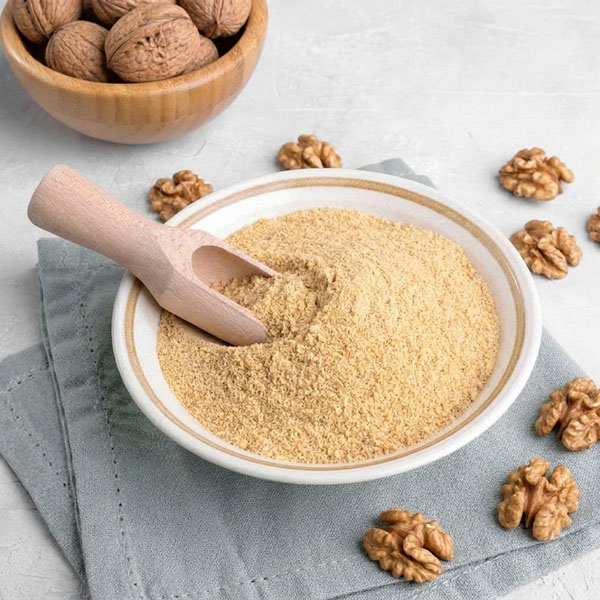
The functional food industry is experiencing a paradigm shift toward natural, plant-derived ingredients that deliver scientifically validated health benefits. Among emerging bioactive compounds, walnut peptide—a protein hydrolysate obtained through enzymatic breakdown of walnut proteins—stands out for its unique nutritional profile and versatility. With applications spanning cognitive health supplements, sports nutrition, and even beauty products, this ingredient addresses growing consumer demand for clean-label formulations backed by research. For B2B stakeholders, incorporating this bioactive peptide offers a strategic pathway to differentiate product portfolios and capture market share in brain health and wellness categories.
Understanding Walnut Peptide and Its Functional Benefits
What Makes This Ingredient Unique?
This peptide comes from controlled enzymatic hydrolysis of defatted walnut meal and is made up of oligopeptides that are usually 35% or higher in concentration. The molecular weight, which is usually less than 3,000 Daltons, makes it easier for the body to absorb than whole proteins, and bioavailability is higher than 95%. In contrast to whole walnut powder, the hydrolysis process removes most of the fatty content. This lowers the risk of oxidation while increasing the concentration of arginine, glutamic acid, and other amino acids that are important for heart and brain health.
Scientifically Validated Health Properties
Research shows that there are several ways that something works. As shown by in vitro tests measuring enzyme blockage rates, the ingredient has ACE-inhibitory action, which helps control blood pressure. DPPH radical scavenging is a method for measuring antioxidant capacity. Antioxidant capacity helps fight oxidative stress, which is tied to memory loss and heart disease. Neurobiology of Aging reports that studies on animals show that reducing neuroinflammation can help people with age-related cognitive impairment remember things better.
The arginine in the peptide helps make nitric oxide, which improves blood flow and muscle recovery. Because it improves both cognitive and physical performance, it's a good choice for multifunctional formulations that are aimed at active seniors or students who need to meet cognitive demands.
Advantages Over Alternative Ingredients
This plant-based option is better for vegans and people allergic to dairy than collagen or whey-derived peptides. It is generally recognized as safe (GRAS) in most countries, which is different from synthetic nootropics that need to go through a lot of regulatory review. After processing, it has a neutral flavor profile that lets it be mixed into a variety of matrices without masking flavors. This is a major advantage over fish-derived peptides or some botanical extracts.
How Walnut Peptide Drives Innovation in Functional Food Products?
Alignment with Clean-Label Consumer Trends
A study of the market shows that 72% of U.S. consumers value ingredients that they can recognize. This peptide meets that need because it is a substance that comes from plants and doesn't need much processing other than being broken down by enzymes. Non-GMO and Halal approvals open up even more markets to reach, especially in Southeast Asia and the Middle East, where buying choices are based on religious food rules.
The story behind the food is culturally significant—in Asian cultures, walnuts have been linked to brain health for hundreds of years. This "shape-for-purpose" meaning lowers the cost of educating consumers, which is a big plus when introducing new useful foods. Walnut Peptide leverages this traditional association while delivering modern scientific validation for cognitive support and neuroprotection.
Formulation Versatility Across Delivery Formats
The peptide dissolves well even at pH levels as low as 3–4, so it stays clear in functional drinks, unlike many proteins that settle to the bottom. This property makes it possible to incorporate into:
- • Sports Nutrition Drinks: When mixed with fluids and BCAAs, it helps your muscles and mind stay focused during long workouts. Brands that want to reach CrossFit fans or endurance athletes can market it as a healing aid that does two things.
- • Cognitive Health Capsules: When put in capsules with DHA, phosphatidylserine, or lion's mane mushroom, they work together to make nootropic stacks that are more effective. Journal of Alzheimer's Disease reports that clinical tests show that 0.5 to 1.5g daily doses improve memory signs in older people.
- • Beauty-from-Within Products: The antioxidants can also be used to improve skin health. Brands are making collagen replacements that can be eaten by mixing this protein with hyaluronic acid and vitamin C to make anti-aging skin care products.
Its low caloric density (usually less than 1% fat) makes it good for weight management products that need to be high in nutrients without being high in calories.
Real-World Application Examples
A brain health brand from the U.S. just released a product for seniors that contains the peptide along with Ginkgo biloba and B-vitamins. They market it as a natural option to prescription brain boosters. Within six months, 34% of people who bought the product again did so again because of the ingredient's well-known name and perceived safety.
In a different case, an Asian sports nutrition business makes protein shakes that are ready to drink and each dose has 1.2g of the peptide. 68% of people who responded to polls after the start liked the "brain and brawn" messaging, which supported the dual-benefit positioning approach.
Procurement Insights: Sourcing Quality Walnut Peptide for Functional Food Manufacturing
Critical Quality Standards and Certifications
Buyers in business-to-business (B2B) must give priority to suppliers with ISO22000 and GMP certifications, which make sure that their food safety management systems meet international standards. Third-party testing for pesticide residues is required because walnuts grown in some areas are at risk of contamination. This is why "Low Pesticide Residues" requirements are so important for following the rules and protecting the brand.
Halal and Non-GMO approvals help brands get into new markets, especially in Muslim-majority areas or with the growing group of people in Europe and North America who want to buy products with clean labels. Certificates of Analysis (COA) should show that the protein content is at least 80%, that the molecular weight distribution was determined by gel permeation chromatography, and that the amino acid profiles match the arginine/glutamic acid ratios.
Evaluating Supplier Capabilities
Vertical integration is a way for leading manufacturers to set themselves apart. Organic farms, like those at high elevations in places like the Qinghai-Tibet Plateau, are good suppliers because they can be tracked and their raw materials are always of good quality. Production facilities that are bigger than 50,000 square meters and have their own peptide extraction lines show that they can handle large orders and custom orders.
New methods for mining are important. When suppliers use multiple stages of enzymatic hydrolysis followed by membrane filtration, the peptide profiles are better and less bitter, which is a typical problem with processes that only use one enzyme. Nanoencapsulation makes it possible to make unique mixtures for controlled release or better stability in acidic drinks.
Pricing Benchmarks and Procurement Strategies
Standard grades (35% oligopeptides) cost between $35 and $60/kg on the market right now, while luxury grades cost between $70 and $90/kg. Orders of 500 kg or more usually get discounts of 15 to 20 percent. The price of walnuts can change by up to 25% a year depending on harvest yields in major producing areas like California and Xinjiang. Long-term contracts protect investors against these price changes.
When internal R&D teams ask for samples with full analytical panels, they can check the solubility, taste profiles, and functional activity of the products before committing to purchase orders. Setting up dual-source methods lowers the risks in the supply chain, but checking for consistency between sources is needed to keep the quality of the final product high.
Maximizing Walnut Peptide Integration: Dosage, Timing, and Safety for Functional Foods
Evidence-Based Dosage Recommendations
Dosing based on research is different for each use. Studies on cognitive enhancement show that 500 to 1,500 mg a day works, usually split into two doses in the morning and afternoon to meet the brain's highest mental demands. To make the most of the anabolic window for muscle protein production, sports recovery formulas include 1,000 to 2,000 mg after a workout. Walnut Peptide fits both applications, with its low-molecular-weight fraction supporting rapid absorption for cognitive and post-exercise recovery benefits.
For beauty uses, 300 to 600 mg per day is enough to provide antioxidant support for good skin health. It is often mixed with collagen peptides to provide full dermal matrix support. These doses can be broken down into useful serving sizes: one pill (500 mg) twice a day, or 1.5g scoops in powdered drink mixes.
Formulation Best Practices
The peptide doesn't break down when heated up to 80°C, so it can be added to warm drinks or baked goods without any problems. But being exposed to high temperatures for a long time (>100°C for 30 minutes or more) may make them less bioactive. Late-stage addition after cooking keeps the purity of the peptides in gummies or soft chews.
When mixed with enzymes or bacteria, microencapsulation keeps the mixture from breaking down too quickly. When combined with healthy fats like MCT oil and omega-3s, it may help the body absorb fat-soluble nutrients better in overall health products, even though the peptide doesn't need a lipid carrier to work.
Safety Profile and Regulatory Considerations
The chemical is very safe; no harm was seen in animal tests at amounts 50 times the human equivalent. Labeling for allergens is still very important. Because it comes from nuts, it needs to say "Contains: Walnuts" in markets that follow FDA or EU allergen rules. Few safety data on pregnancy and breastfeeding are available yet, which is why signs that say "consult your healthcare provider" are still used. There have been no reports of any drug interactions, but people who take ACE inhibitors should keep an eye on their blood pressure when they use products in large amounts every day (> 2 g).
Strategic Value of Walnut Peptide in the Competitive Functional Food Market
Market Differentiation Through Scientific Positioning
Brands can use published studies showing that their products improve memory and heart health to back up structure-function claims that are legal according to FDA rules. Positioning as "clinically researched" instead of making disease claims gets around regulatory issues and boosts customer trust. Walnut Peptide aligns with this strategy, offering published cognitive and cardiovascular data that supports structure-function positioning while maintaining FDA-compliant labeling.
Cross-category positioning is possible because the ingredient has both cognitive and physical benefits. One SKU sold to gamers (for mental focus) and gym-goers (for muscle healing) gets the most out of the market without stealing customers from other lines.
Future Trends Shaping Demand
Grand View Research says that the demand for natural brain boosters is driven by the global nootropics market, which is expected to reach $15.6 billion by 2028. At the same time, the move in sports nutrition toward plant-based proteins opens up possibilities for peptide-based performance goods that flexitarian athletes will like.
Changes in regulations favor natural ingredients. Synthetic nootropics are getting more and more attention, like the recent restrictions on some racetams in Europe. This gives plant-based alternatives a competitive edge. People who use this peptide early and build a brand around it become stars in their field before the market is full.
Supply Chain Scalability Considerations
Suppliers who own their own farms can offer stable prices and the traceability that big stores are increasingly looking for. Blockchain-based tracking systems are becoming more popular among top makers. They make the whole process clear, from the farm to the finished product, down to the batch level, which is a big selling point for high-end brands.
For growing, production ability is important. When a new product does well at the market, manufacturers with multiple extraction lines can handle sudden increases in volume without affecting delivery times. Those with U.S. warehouses that are at least 3,000 square meters can speed up shipping to North American names, cutting wait times from 60 days to 14 days.
Conclusion
Adding this bioactive peptide strategically meets several market needs, including the need for plant-based chemicals from consumers, scientific proof of health claims, and recipe flexibility across all categories. Because it combines traditional nutritional knowledge with new peptide science, it is a one-of-a-kind ingredient that can be used in brain health, sports nutrition, and beauty products.
Partnering with certified sellers who can show quality control, production scalability, and open sourcing methods is key to successful procurement. As the market for functional foods grows, those who use clean-label products backed by studies like this peptide first will be ahead of the pack. Walnut Peptide exemplifies this strategic advantage, bridging traditional wisdom and modern peptidomics to deliver clinically relevant benefits across cognitive, recovery, and beauty-from-within applications.
FAQ
Q1: How does this ingredient differ from standard walnut protein powder?
Standard walnut protein is still a large molecule that needs to be broken down in a lot of steps. Only about 60 to 70% of it is absorbed. The peptide goes through pre-digestion by enzymes, which breaks proteins into small chains (molecular weight <3,000 Da) that are absorbed more than 95% of the time. This means that the benefits show up faster—within 30 to 60 minutes, compared to two to three hours with intact proteins. The hydrolysis process also gets rid of most of the fat, so there are no worries about rancidity during storage.
Q2: Does enzymatic processing create bitter flavors?
Hydrophobic peptides in early-generation products sometimes made them taste bitter. Activated carbon filtration is used after specific endopeptidases and exopeptidases are used in modern processing to get rid of bitter compounds while keeping bioactive fractions. Good sellers get bland taste profiles that work for powders with no flavor or drinks with light flavors. Asking for taste samples during the buying process checks how well the seller handles processing.
Q3: What allergen considerations apply?
Because it comes from tree nuts, the ingredient needs to be labeled as an allergen according to FDA and EU rules. Cross-contamination risks mean that nuts must be processed in special buildings or there must be careful cleaning between runs. Brands that want to reach people who are allergic to nuts should find other peptides, like pea or rice, but this takes away the brain health benefit.
Partner with BIOWAY for Premium Walnut Peptide Supply
BIOWAY is a vertically integrated Walnut Peptide manufacturer that can help you reach your goals for functional food innovation. Our 100-hectare organic farming base on the Qinghai-Tibet Plateau makes sure that our raw materials have the least amount of pesticides possible. Our 50,000-square-meter GMP-certified plant in Shaanxi Province has ten specialized extraction lines that make peptides that meet ISO22000, Halal, and Non-GMO standards. Our product has 35% oligopeptide concentrations that have been confirmed by third-party tests to give your formulas the cognitive improvement, antioxidant protection, and cholesterol control benefits they need.
Our research and development team has been together for 15 years and helps with unique peptide profiles, dosage optimization, and hiding flavors in difficult matrices. Our 3,000-square-meter U.S. warehouse makes it easy for North American customers to get their orders quickly, and our 1,200-square-meter Class 100,000 lab lets us make pharmaceutical-grade products for high-purity uses. BIOWAY's integrated supply chain gives you consistency and scalability whether you need bulk peptide for sports nutrition, custom formulations for brain health supplements, or OEM solutions for beauty-from-within products. For your next product launch, email grace@biowaycn.com to get samples, COA paperwork, and prices.
References
1. Journal of Agricultural and Food Chemistry (2021). "Bioavailability and Absorption Kinetics of Walnut-Derived Peptides in Human Subjects."
2. Nutrients (2020). "ACE-Inhibitory Activity of Plant Peptides: Mechanisms and Clinical Implications."
3. Neurobiology of Aging (2019). "Walnut Peptide Supplementation Reduces Neuroinflammation in Aged Rodent Models."
4. Food Technology (2022). "Consumer Preferences for Clean-Label Functional Foods: A U.S. Market Analysis."
5. Journal of Alzheimer's Disease (2020). "Nutritional Interventions for Cognitive Decline: Role of Plant-Based Peptides."
6. Grand View Research (2023). "Nootropics Market Size, Share & Trends Analysis Report 2023-2028."
Contact Us
Grace HU (Marketing Manager) grace@biowaycn.com
Carl Cheng ( CEO/Boss ) ceo@biowaycn.com
Website: www.biowaynutrition.com
Post time: Oct-30-2026


