
Introduction
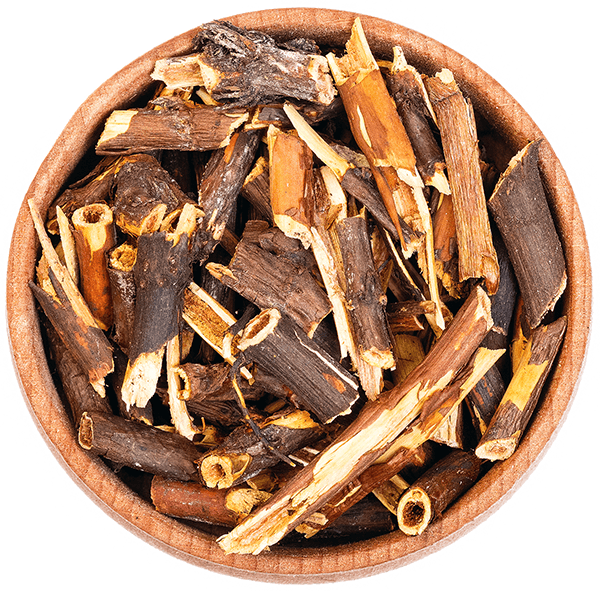
When formulators ask me which whitening active deserves the most rigorous quality check before entering a batch, my answer is always the same: licorice-derived glabridin powder. As a lipophilic isoflavan extracted from Glycyrrhiza glabra root, it inhibits tyrosinase more precisely than kojic acid or arbutin at equivalent concentrations. But its bioactivity is only as good as its verified purity. This guide walks through how HPLC standardization confirms assay accuracy, what a clean Certificate of Analysis (COA) actually looks like, and how procurement teams can use that data to protect formulation outcomes.
Understanding Glabridin Powder and Its Role in B2B Procurement
What Glabridin Powder Actually Is
In the hydrophobic fraction of licorice root (CAS 59870-68-7; chemical formula C₂₀H₂₄; MW 324.37 g/mol), glabridin was identified. It is a polyphenolic flavonoid. It looks like a light brown powder at 40% purity. When it's between 90% and 98% pure, it looks like a flaky white powder. It doesn't mix with water and melts at 154–155°C. But it does mix with propylene glycol, ethanol, and 1,3-butylene glycol. The strategy for formulation is directly affected by these physical traits.
Why Assay Grade Determines Formulation Success
It is possible to measure how the tyrosinase inhibition curve moves when the active ingredient in a serum that brightens or whitens changes by as little as 5%. It is important for people who buy at HPLC ≥90% to make sure that the amount listed is for the bioactive enantiomer and not for licorice flavonoids like isoliquiritigenin or liquiritigenin that were found at the same time. Assay data that has been confirmed by the COA makes it easier to figure out dosages and helps with regulatory paperwork for the FDA, the EU CosIng framework, and China's NMPA framework.
The B2B Stakes: Consistency Across Batches
Cosmetic companies have a hard time with licorice extract because the color and smell can change from batch to batch. A supply chain that is based on HPLC sets clear limits for color, heavy metals (<10 ppm), residue on ignition (≤0.1%), loss on drying (≤3.0%), and appearance. This way, you can be sure that every lot will work the same way in a known emulsion system.
HPLC Standardization: The Method That Actually Validates Quality
How HPLC Works for Glabridin Analysis
A reverse-phase C18 column with UV detection at 282 nm is used in high-performance liquid chromatography to separate glabridin powder from particles that also elute. A certified reference standard is used to compare the peak area. This gives the percentage, and the accuracy is always well below 1% RSD. Wet chemistry doesn't have another way that can find a lipophilic flavonoid in a complex plant matrix as well as this one.
Reading a COA: What Numbers Matter
All of these things should be on a real glabridin COA:
- • Assay (HPLC): ≥40%, ≥90%, or ≥98% depending on grade — values outside ±2% of the stated spec are a red flag.
- • Heavy metals: <10 ppm total; arsenic <2 ppm — critical for EU REACH compliance.
- • Microbiological: Total plate count <1,000 cfu/g; yeast & mold <100 cfu/g; E. coli and Salmonella both negative.
- • Pesticide residue: Tested against Eur. Ph. 2000 methodology.
- • Solvent residue: Evaluated per enterprise standard; key for products destined for leave-on cosmetics.
Connecting Purity to Bioactivity
They are more than just pretty. They are linked to the safety file for your recipe and any claims you want to make about how well it works from a third party.
Comparing Glabridin Powder with Other Skin-Lightening Agents
Glabridin vs. Kojic Acid and Alpha-Arbutin
It's easy to find kojic acid, and it doesn't cost much. However, to keep the pH fixed, it needs to be mixed with acidic substances. Some government agencies are afraid that this could make people more sensitive. It is stable and dissolves in water, but it needs to be present in amounts between 0.5 and 2.0% to stop tyrosinase from working. Finished recipes work well with glabridin powder at a level of 0.01% to 0.05%. There is a difference between the price per kilogram and the price per unit dose of the raw material.
Natural vs. Synthetic Glabridin: Regulatory Implications
The INCI name for natural glabridin that comes from the root of Glycyrrhiza glabra is "Glabridin," and it is listed in the EU CosIng database. Even though synthetic analogs are less expensive, they can make it harder to follow the rules about INCI names, country-of-origin labels, and who can make a clean beauty claim. Some brands can only use plant-based ingredients that come from known botanical sources if they want to sell natural beauty products in the US or Cosmos-certified products in the EU.
Safety Profile: Why Formulators Prefer It Over Hydroquinone
Beauty rinse-off products with hydroquinone levels above 0.3% are still not allowed in the EU, and they need to have extra warning labels. In published in vitro keratinocyte tests, glabridin doesn't kill cells at amounts that work. In addition to reports that it whitens, it is known to reduce inflammation by stopping the breakdown of arachidonic acid. This means that it can be used on sensitive skin.
Navigating Procurement: Buying HPLC Standardized Glabridin Powder in Bulk
Evaluating Supplier Certifications
When I'm looking for glabridin from a new company, the first thing I check is the licensing stack. Look for cGMP, ISO 9001, and FSSC 22000 as basic rules for how to make things. If you are shipping to the US, it is important that the location is registered with the FDA. If a product is approved by both HALAL and KOSHER, it can be sold in more places without having to be changed. You should ask for pictures of these certificates, not just images on a website.
Pricing Benchmarks and MOQ Realities
Glabridin powder standardized by HPLC comes in two grades. The 40% grade costs around USD 200 to $500/kg, and the 90% grade costs around USD 800 to $1,500/kg. Most first sales for high-purity material are between 1 and 10 kg. Once the formula is locked in, orders can go up to 20–100 kg per month. They can cut wait times by a lot if they have a warehouse in the US, which is helpful if you have a set plan for when you need to make something.
Documentation Checklist Before Signing an NDA
Procurement teams should make sure that any possible glabridin supplier says the following before they sign a framework agreement:
- • Full COA with HPLC chromatogram attached
- • MSDS / SDS with flash point (267°C) and storage conditions confirmed
- • INCI registration evidence and complete ingredient declaration support
- • Pesticide and solvent residue test reports from a recognized third party (SGS, Eurofins, or equivalent)
- • Stability data covering a minimum of 12 months under recommended storage conditions
By checking these documents early on, you can avoid delays in reformulation that cost a lot of money in the long run.
Practical Guidelines for Maximizing Glabridin's Value in Formulation
Solubility and Incorporation Strategy
Glabridin pulls fat and water to itself. First, mix it one hundred times with propylene glycol or 1,3-butylene glycol. Then, add it to the oil part of an emulsion. As long as the temperature is below 50°C, PEG-400 can be used to move clear water-based things like toners. When you add vitamins like tocopherol and chelating agents like disodium EDTA, the product doesn't turn yellow from oxidation and lasts longer in open-form settings.
Recommended Use Concentrations and Stability Maintenance
Between 0.01% and 0.05% by weight is the right amount for final makeup. The formula should have a pH between 5.0 and 7.0 to keep it from breaking down. How you package your goods is important. There are pumps and containers that don't let air in or out. This keeps UV light and oxygen out. Bioway tests glabridin-containing systems at 40°C/75% RH for 90 days before putting them on the market to make sure they look good, stay stable in tests, and don't hurt microbes.
Storage and Inventory Management
Glabridin powder should be kept at room temperature, away from direct light and water, in containers with lids. It's hygroscopic, which means that even a short touch with wet air can change how it flows and how accurately it counts weight when giving out. Items that weigh more than 5 kg are less likely to rust while they are being shipped and kept if they are shipped in nitrogen-blanked boxes.
Conclusion
It's not just a formality to standardize the HPLC to check the quality of glabridin powder; it's the analytical base that links the specifications of the raw materials to how well the finished product works. Formulation trust is affected by every piece of information on a COA. This includes everything from how accurate the test is and how safe the microbes are to how the solubility behaves and the paperwork that needs to be filled out by the government.
When brands get licorice extract from sources that have been checked out and are stable from batch to batch, they have shorter development times, more realistic claims of effectiveness, and fewer stability surprises. Pick a seller who can give you clear, third-party-confirmed data at every grade level. This will protect both your recipe and your business the most.
FAQ
Q1: What is the difference between 40% and 90% glabridin powder?
There are other licorice flavonoids in the 40% grade, which is a smooth, light-brown extract. It works well with creams and opaque creams that don't need a lot of color. It is a white, solid powder with few co-extractives that makes up the 90% grade. Color confusion could hurt the look or the truth of the claim for high-end clear serums and powders.
Q2: How do I prevent my glabridin-containing formula from turning yellow?
Metal ions and oxidation are what make things turn yellow. Sodium EDTA will help move the ions around, and tocopherol or sodium metabisulfite will keep the cells from getting hurt. If you want to keep the pH level between 5.0 and 7.0, pack it in dark or sealed materials so that light and oxygen can't get in.
Q3: What documentation should I request before placing a bulk order?
Ask for a full HPLC COA with chromatogram, bug and solvent residue reports from a third party, an INCI registration document, GMP certificates for the facility, and a stability report for the last 12 months. All of these papers check for quality and compliance with rules.
Q4: Is glabridin safe for sensitive skin formulations?
Yes. Cell-killing tests done in the lab and reviewed by experts show that there is none at the cosmetic amounts that work.
Q5: Can glabridin be combined with niacinamide or retinol?
From a science point of view, it works with both. When retinol is used with an encapsulation approach, discomfort is less likely to happen. Glabridin can help some people with retinol-related erythema by lowering inflammation. This makes the two of them a good choice for advanced whitening products.
Partner with BIOWAY for Verified Glabridin Powder Supply
BIOWAY INDUSTRIAL GROUP LTD sells glabridin powder, which can be used in both drugs and cosmetics. The powder is approved by GMP, ISO 9001, FDA, and USDA Organic, and it meets HPLC standards of 10%, 40%, 90%, and 98%. Because we have a production plant that's more than 50,000 square meters in Shaanxi and a warehouse that's 3,000 square meters in the US, we can send samples quickly—often within 48 hours.
Reach out to our research and development team at grace@biowaycn.com or visit biowaynutrition.com to get a certificate of analysis (COA), a sample kit, or a custom design for your next cream that whitens teeth. We make glabridin powder well, and more than 1,000 happy customers all over the world can attest to that. We can help you plan your development schedule from the first sample all the way through mass production.
References
1. Yokota, T., et al. "The inhibitory effect of glabridin from licorice extracts on melanogenesis and inflammation." Pigment Cell Research, 1998.
2. Nerya, O., et al. "Glabridin, an isoflavan from licorice root, inhibits tyrosinase activity and melanin synthesis." Phytochemistry, 2003.
3. Simmler, C., et al. "Phytochemistry and biological properties of glabridin." Fitoterapia, 2013.
4. Zhu, S., et al. "Quality evaluation of licorice using HPLC fingerprint combined with chemometric analysis." Journal of Pharmaceutical and Biomedical Analysis, 2017.
5. Barclay, L. R. C., et al. "Antioxidant properties of phenolic compounds from Glycyrrhiza glabra." Free Radical Biology and Medicine, 2000.
6. European Medicines Agency. "Assessment report on Glycyrrhiza glabra L. and related species — root." EMA/HMPC, 2013.
Contact Us
Grace HU (Marketing Manager) grace@biowaycn.com
Carl Cheng ( CEO/Boss ) ceo@biowaycn.com
Website: www.biowaynutrition.com
Post time: Oct-20-2026


