
Introduction
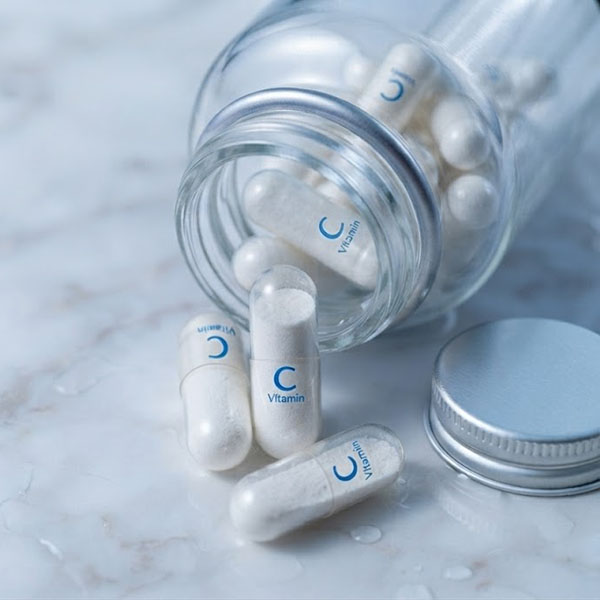
When evaluating Vitamin C supplementation for product formulations, the answer increasingly favors liposomal delivery systems. Vitamin C phospholipid liposomes demonstrate superior bioavailability, cellular absorption, and stability compared to traditional ascorbic acid forms. The phospholipid bilayer protects the active compound through digestive transit, ensuring higher concentrations reach target tissues. This translates to enhanced efficacy in nutraceutical formulations, cosmetic applications, and functional beverages where measurable results drive consumer satisfaction and repeat purchases.
Understanding Vitamin C: Traditional vs Liposomal Forms
Ascorbic acid has been the standard in the business for decades because it is a safe antioxidant and helps the body make collagen. But the fact that it dissolves in water creates problems that affect how well the product works and how happy the customers are. When exposed to light, heat, or air during production or storage, things break down quickly. Also, the digestive system still doesn't absorb a lot of vitamin C. Studies show that only 10–20% of standard vitamin C gets into the bloodstream at higher doses.
Molecular Structure and Stability Challenges
Normal ascorbic acid molecules go through the digestive system without being protected. Stomach acid and enzymes break down a big part of it before it can be absorbed. Because of this restriction, makers have to use higher doses to get therapeutic benefits. This drives up the cost of formulation and could cause stomach problems for end users.
Phospholipid-Based Encapsulation Technology
Liposomal packaging is a big step forward in the science of getting nutrients to cells. Phospholipids from sources like soy lecithin are used in this technology to make tiny bubbles that look like cell membranes. These bilayer spheres protect vitamin C molecules from breaking down and make it easier for them to get through digestive barriers. BIOWAY's liposomal formulation combines natural vitamin C from Acerola Cherry with soy phospholipids from Glycine max. This creates a synergistic delivery system that keeps the integrity of the ingredients from production to consumption.
Enhanced Bioavailability Through Cellular Mimicry
Because the structure of the phospholipid bilayer is like that of human cell membranes, it can directly enter cells through membrane fusion. This method gets around the normal problems with absorption, sending vitamin C straight into cells where it can do its antioxidant and metabolic work. Researchers have found that liposomal types can reach blood concentration levels that are similar to intravenous dosing. This is a big step forward for supplementing by mouth.
Performance and Benefits: Liposomal Vitamin C vs Traditional Vitamin C
When you compare the performance of different delivery methods, you can see that there are big changes that affect how well the formulation works and how competitive the market is. The encapsulation method gets around a number of problems with regular ascorbic acid products, which opens the door to more unique product positioning.
Absorption and Bioavailability Advantages
Vitamin C in the form of liposomes is absorbed 3–6 times better than other types. This change is due to the protective phospholipid layer that stops breakdown before it happens and makes it easier for membranes to move through the intestines. Vitamin C Phospholipids Liposome represents this advanced delivery system, which ensures that active ingredients reach target tissues in therapeutically relevant concentrations, which is important for companies that want to make claims about bone health and heart health support. The continuous release profile keeps blood levels fixed for a long time, so people don't have to take as many doses and are more likely to stick to their schedule.
Skincare and Cosmetic Applications
Vitamin C formulas for use on the skin or in the mouth have problems with oxidation that make the products less stable and less effective. Encapsulated forms are very resistant to external stresses and keep their effectiveness for a long time. For cosmetic uses, the technology has a number of unique perks. At the cellular level, phospholipid transporters deliver concentrated vitamin C straight to fibroblasts, which speeds up the production of collagen. Liposomal shapes neutralise free radicals before they can damage cellular components, making antioxidant defence work better. Better tyrosinase reduction at melanocyte sites makes the skin-lightening benefits look stronger. The soft recipe lessens the irritation that comes with high doses of ascorbic acid, so products are good for people with sensitive skin.
Safety Profile and Reduced Side Effects
Traditional high-dose vitamin C supplements often make digestive problems worse, like cramps, diarrhoea, and irritation of the stomach. These worries are lessened by the fact that liposomal delivery is slow-release, which spreads absorption over longer periods of time and lowers localised intestinal concentration. This trait is especially useful for functional beverage formulations, since the way a customer feels about a brand directly affects how they feel about it and how likely they are to buy it again.
Practical Considerations for B2B Buyers
Buying choices involve more than just how well an item works; they also involve how well it works with other products, following the rules, and the cost of the supply chain. Understanding these practical aspects is important for making sure that product development and market entry go well.
Quality Parameters and Certification Requirements
Nutraceutical-grade liposomal vitamin C has to meet strict quality standards that make sure the ingredients are pure and the packaging works well. The amount and quality of phospholipids have a direct effect on how liposomes are made and how stable they are, so it is important to check the seller. BIOWAY maintains cGMP, ISO22000, HACCP, and FSSC certifications for our manufacturing methods.
This makes sure that our goods meet FDA and EFSA standards. Testing by a third party establishes limits on heavy metals, the lack of pesticide residue, and microbiological safety factors that are important for use in the pharmaceutical business. Our detailed paperwork includes Certificates of Analysis (COA), Technical Data Sheets (TDS), Material Safety Data Sheets (MSDS), and records of traceability that help with regulatory submissions around the world.
Formulation Compatibility and Processing Stability
Liposomal ingredients can be used in capsules, powders, liquids, and softgels, among other product forms. For formulation compatibility, however, it is important to pay attention to pH ranges, temperature exposure during processing, and reactions between excipients that could damage the structure of liposomes. Vitamin C Phospholipids Liposome is a prime example of such a delicate system, where maintaining structural integrity is critical for efficacy. Our technical team helps with product development timelines and regulatory applications by giving formulation advice and stable data. We use film-evaporation and high-pressure homogenisation to achieve nano-precision encapsulation. This creates a regular particle size distribution that makes sure that all production runs work the same way.
Pricing Dynamics and Supply Chain Considerations
Because of the need for specialised equipment, phospholipid raw materials, and quality control, liposomal technology costs more to make than regular vitamin C. However, the improved bioavailability means that smaller doses are needed to have the same biological effects, which could counteract the higher cost of the ingredients. Our 100-hectares of organic farmland on the Qinghai-Tibet Plateau are used for everything from organic farming to extraction in our 50,000-square-meter building. This gives our long-term partners supply security and reasonable prices. The 3,000-square-meter US warehouse keeps inventory available and allows quick delivery to customers in North America.
How to Choose the Best Vitamin C Phospholipids Liposome for Your Product Line
To find the right liposomal ingredient supplier, you need to carefully consider several factors that will affect both your immediate production needs and your long-term market success.
Defining Product Requirements and Target Market Alignment
Technical specs and quality standards are set by how the product is positioned. For pharmaceutical uses, you need a USP or Ph. Eur. grade materials that have impurity levels that have been checked and proof that each batch is consistent. Optimising particle size for skin entry and stability in emulsion systems is a top priority for cosmetic formulas. Functional food and drinks need to have mild tastes, be able to dissolve in water, and work with cooking methods like homogenisation or pasteurisation. Our clean-label phospholipid sources and organic approvals (USDA and EU Organic) are in line with what consumers want: natural products that are sourced in a way that doesn't harm the environment. This is becoming more and more popular across all markets.
Evaluating Manufacturing Capabilities and Certifications
Supplier manufacturing infrastructure has a direct effect on how consistent products are and how well they follow the rules. Modern facilities with cleanrooms keep contamination risks low, which is important for sensitive applications. Our Class 10,000 laboratory, which is 1,200 square meters, helps make high-purity materials for cosmetics and medicines. The ten different production lines, which include makeup extraction tanks, make it possible to tailor the products to specific needs. Our ISO9001, BRC, HALAL, and KOSHER certifications make it easier to reach a wide range of foreign markets and confirm the quality of our quality control systems.
Value-Added Services: Customization and Technical Support
Strategic supply partners are different from commodity ingredient providers because they can help with formula creation, stability test, and make their own brands. We give full scientific information, like particle size analyses, encapsulation efficiency reports, and accelerated stability data to back up promises about shelf life. Vitamin C Phospholipids Liposome serves as a core functional component in such formulations, and its compatibility with other actives is critical for synergy.
New brands that need flexible minimum order quantities (MOQ) and quick iteration cycles can use small-batch trial production. Formula optimisation advice helps brands mix liposomal vitamin C with ingredients that work well together, such as vitamin E, glutathione, or coenzyme Q10. This makes antioxidant networks that work better together and supports different claims about how well they work.
Future Trends and Innovations in Liposomal Vitamin C Delivery
New phospholipid sources, better manufacturing processes, and better targeting mechanisms are all being studied to make encapsulation technology better and better. These improvements should lead to even bigger performance gains. New technologies are focusing on fine-tuning the size distribution of liposomes down to the nanometre level, making particles that are best for certain absorption routes. Sustainable phospholipid sources innovations help the earth while keeping performance levels the same.
Biodegradable, plant-based options to synthetic excipients are in line with customer trends toward clean labels, which affect their buying choices. Liposomal nutrient delivery is expected to grow quickly, especially in the high-end vitamin and cosmetics markets, where customers are willing to pay more for products that have been scientifically proven to work. The global functional food market is expected to grow to more than $275 billion by 2026. This means that ingredient sellers who can meet quality, regulatory, and sustainability standards will have a lot of possibilities.
Conclusion
Comparing liposomal and standard ways of delivering vitamin C shows that encapsulated forms are clearly better in many important ways. More bioavailability, better stability, fewer side effects, and better release to cells are all great benefits for makers in the nutraceutical, skincare, and pharmaceutical industries. Vitamin C Phospholipids Liposome exemplifies this advanced encapsulated form, delivering the full spectrum of these performance advantages in a clinically relevant vehicle.
Even though liposomal ingredients cost more at first, their higher effectiveness allows for better product placement and supports higher price strategies. When B2B buyers put product performance, customer satisfaction, and regulatory compliance at the top of their list of priorities, choosing a vertically integrated supplier with a wide range of certifications and technical support skills is a smart way to stay competitive in the long term.
FAQ
Q1: What certifications should I require when sourcing liposomal vitamin C for pharmaceutical applications?
Pharmaceutical-grade liposomal vitamin C requires cGMP certification to demonstrate compliance with quality standards for manufacturing. Pharmacopoeia compliance documentation (USP, Ph.Eur.), thorough impurity testing (heavy metals, pesticide residues), microbiological safety validation, and batch-to-batch consistency data should all be provided by suppliers. ISO certifications (ISO9001, ISO22000) prove that quality management systems work, and HACCP and FSSC certifications prove that food safety rules are followed.
Q2: How does liposomal vitamin C absorption compare to traditional ascorbic acid?
Clinical research shows that liposomal encapsulation makes vitamin C 3–6 times more bioavailable than regular oral supplements. The phospholipid bilayer guards vitamin C while it goes through the digestive system and makes it easier for cells to take it in directly through processes that involve membrane fusion. Blood concentration tests show that liposomal forms reach amounts similar to intravenous dosing, while standard oral ascorbic acid stops being absorbed at doses higher than 200 mg.
Q3: Can liposomal vitamin C be used in sensitive skin formulations?
The enclosed delivery method makes it much less likely that high-concentration ascorbic acid will irritate the skin. The slow-release properties keep localised concentration spikes on the skin from happening, which can cause sensitivity responses. The phospholipid carrier adds to the moisturising benefits and improves the function of the skin barrier. This means that liposomal products are good for people with sensitive skin who want antioxidant and whitening benefits without sacrificing any of those benefits.
Partner with BIOWAY for Premium Vitamin C Phospholipids Liposome Supply
BIOWAY offers liposomal vitamin C ingredients that are safe for use in pharmaceuticals, along with full quality paperwork and expert support. As a top producer of Vitamin C Phospholipids Liposomes, our vertically integrated operations make sure that you always get what you need, that our prices are competitive, and that you can make changes that speed up the growth of your product. Our mix of organic Acerola Cherry and soy phospholipids meets all world standards, such as those set by the FDA, EFSA, USDA Organic, and cGMP.
With more than 15 years of experience working with plant extracts and cutting-edge nano-encapsulation technology, we help brands come up with new formulas that work. Contact grace@biowaycn.com right away to get full product details, information on how stable our Vitamin C Phospholipids Liposome is, cheap quotes, and free samples to try out before you buy them for your next product launch.
References
1. Davis JL, Paris HL, Beals JW, et al. Liposomal-encapsulated Ascorbic Acid: Influence on Vitamin C Bioavailability and Capacity to Protect Against Ischemia-Reperfusion Injury. Nutrition and Metabolic Insights. 2016;9:25-30.
2. Hickey S, Roberts HJ, Miller NJ. Pharmacokinetics of oral vitamin C. Journal of Nutritional & Environmental Medicine. 2008;17(3):169-177.
3. Zhao Y, Brown MB, Jones SA. The topical delivery of vitamin C: a comparison of skin transport of ascorbic acid and ascorbyl palmitate. Pharmaceutical Development and Technology. 2011;16(5):513-524.
4. Carr AC, Vissers MCM. Synthetic or food-derived vitamin C—are they equally bioavailable? Nutrients. 2013;5(11):4284-4304.
5. Gopi S, Balakrishnan P. Evaluation and clinical comparison studies on liposomal and non-liposomal ascorbic acid for enhanced bioavailability. Journal of Liposome Research. 2017;27(3):201-207.
6. DeRosa G, Maffioli P. Ascorbic acid supplementation in cardiovascular disease: a clinical perspective. Expert Opinion on Drug Safety. 2019;18(5):365-372.
Contact Us
Grace HU (Marketing Manager) grace@biowaycn.com
Carl Cheng ( CEO/Boss ) ceo@biowaycn.com
Website: www.biowaynutrition.com
Post time: Jul-30-2026