
Introduction
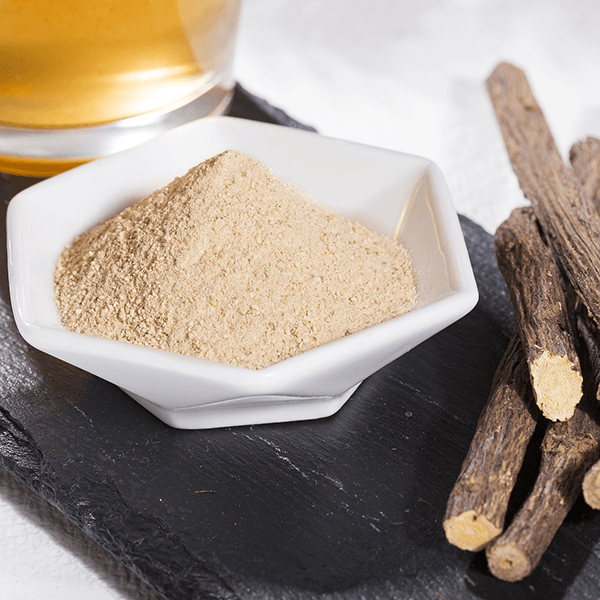
Yes—it's occurring now. Personal care and cosmetics formulators are replacing phenoxyethanol with botanical antioxidants. Licorice extract from Glycyrrhiza glabra is a promising candidate because it has antimicrobial activity and skin benefits. This movement goes beyond consumer choice. It shows governmental pressure, toxicological proof, and a chance for manufacturers to create cleaner, more marketable products.
Understanding the Problem: Why Phase Out Phenoxyethanol?
Phenoxyethanol has served the cosmetics industry as a go-to broad-spectrum preservative for decades. However, its position is no longer secure.
Regulatory Pressure Is Mounting
The European Commission Scientific Commission on Consumer Health (SCCS) has limited phenoxyethanol use to 0.4% in newborn skin products. The FDA is not banned the ingredient in the US, but EWG scrutiny has forced retailers and brands too voluntarily reformulate. This external pressure affects supply chain purchasing decisions at every level.
Consumer Perception Has Shifted
Modern supplement and self care consumers read labels. Over 53% the US skincare customers avoid synthetic preservatives, according to Mintel's 2022 poll. Marketing challenges for phenoxyethanol brands effect shelf positioning and repeat sales. Premium positioning now requires reformulation.
The Clean Label Imperative
Clean-label claims require more than removing one ingredient — they require replacing it with something that performs and tells a story. Synthetic alternatives like methylisothiazolinone carry their own restrictions. This creates a real opening for botanical antioxidant systems built around plant-derived actives, which can check both the safety and the storytelling boxes simultaneously.
Botanical Antioxidants as Self-Preserving Agents: Spotlight on Licorice Extract
Maintaining a low pH level and lowering the activity of water are important for making products that last longer. Phytochemicals, which stop bacteria from growing, should also be used. Glabridin, the main bioactive flavonoid in licorice extract from Glycyrrhiza glabra, does more than one of these things at the same time.
What Makes Glabridin Effective?
This substance, glabridin (CAS: 59870-68-7), stops tyrosinase from doing its job and kills some bacteria, like the common skin pathogen Staphylococcus epidermidis. Its antioxidant properties help keep recipe ingredients from breaking down due to oxidation. In the past, antioxidants made in a lab, like BHT, did this job. It is possible to get the right amount of the active ingredient for the mixture at 40%, 90%, and 98% purity levels that have been checked by HPLC.
Beyond Preservation: Multifunctional Skin Benefits
Because it works on the skin, glabridin is not the same as antioxidant boosters that only do one thing. It stops the production of melanin, lowers inflammation, and protects cells from UV light-induced oxidative stress. You get both a protection co-agent and a clinically useful active when you add Glycyrrhiza root extract to a product. In terms of both following the rules and making claims to customers, this is a good mix.
Extraction Quality and Standardization
BIOWAY makes Glabridin Powder (HPLC ≥98%) from the roots of Glycyrrhiza glabra. It doesn't have any chemicals, GMOs, or fake colors added to it. The powder is light brown to white, and the 90% and 98% grades are white. It melts at 154–155°C and stays stable if it is kept cool and dry. Based on the study's guidelines, there are no pesticides or heavy metals above 10 parts per million (ppm).Arsenic levels are below 2 ppm, Ph. 2000 standards, and microbial counts are well below the levels thought to be safe for cosmetic use. And these are the qualities that supplement brands in the US and EU want to see.
Formulation Principles and Case Studies: Implementing Glycyrrhiza Extract in Self-Preserving Products
To properly store plants, you need to do more than just switch out one item for another. It's important to pay attention to the equation factors.
Dosage and Stability Parameters
Glabridin, the active component from licorice extract, works well as an antioxidant in cosmetics when added at levels between 0.5 and 1% in emulsion systems. It doesn't change the color or structure of the product. Some mixtures turn a little yellow at 2%, but this can be stopped by lowering the pH to between 5.5 and 6.5. BIOWAY's glabridin drops by 3.0% when dried and leaves behind 0.1% when lit, which means it's good for high-stability uses like toners, serums, and creams.
Synergistic Systems
Glabridin works well with rosemary extract and fermented radish root, which are both natural germ killers that come from plants. These systems with more than one function give about the same results in the Challenge Test as regular preservative blends. When glycyrrhiza root extract is used as an anchor ingredient in this type of system, formulators can say that natural ingredients are kept, but they don't have to say how well it works.
Managing Color and Sensory Variables
Less pure types (40%) are a light brown color that could change the way clear things look after they are made. In these cases, the 90% or 98% white powder grade solves the problem fully. BIOWAY has four different HPLC grades: 10%, 40%, 90%, and 98%. This lets people who make products pick based on how much they cost and how they look.
Comparing Preservation Approaches: Licorice Extract vs. Synthetic and Other Botanical Options
The comparison table is useful for buying teams that want to find options to phenoxyethanol.
Performance vs. Synthetic Preservatives
1% of phenoloxyethanol is enough to kill a lot of different microbes. If you want to preserve something without glabridin, you can't do that completely, but when used in a self-preserving framework, they offer similar safety profiles and are more widely accepted by regulators in both the FDA and EFSA. It is also much easier to get organic approval for plant-based ingredients than for man-made ones.
Glabridin vs. Other Botanical Antioxidants
Instead of ginger extract or green tea polyphenols, glabridin is better at stopping tyrosinase from doing its job. It can now be used for more than just protecting against free radicals, thanks to this. It also stays more stable when mixed with oil and water at room temperature. This is a great way for brands that make products for sensitive skin, anti-aging, or brightening to set their products apart.
Organic vs. Conventional Grade
BIOWAY grows raw materials in two different ways: naturally and artificially. For makeup brands that want to get USDA Organic or COSMOS approval, the organic-grade licorice extract from Glycyrrhiza is the proof that certification groups need to look at. People use the regular grade when they want to save money and make clean label claims but don't need organic approval.
Procurement Insights: Sourcing Glabridin Powder for Bulk and OEM Manufacturing
For people in charge of R&D and purchasing, sourcing choices either stay the same or fall apart once sources are qualified.
Certifications That Matter
BIOWAY is certified by cGMP, ISO 9001, ISO 22000, HACCP, FDA, FSSC 22000, HALAL, KOSHER, BRC, and USDA/EU Organic. Over 50,000 square meters of space make up the plant in Shaanxi Province. It has a Class 10,000 laboratory that is 1,200 square meters in size and is good for making makeup. Each batch has a COA from a third party, and if you ask, you can see the HPLC fingerprint data. In order to make dossiers for the FDA or EFSA, regulatory affairs teams need this exact thing.
MOQ, Lead Time, and US Warehouse Advantage
For the sampling and scale-up stages, 25 kg is the smallest amount that can be ordered. The biggest amount that can be ordered to meet a volume promise is 100 kg. It takes up 3,000 square meters and is owned by BIOWAY. Because of this, transatlantic wait times are less likely to happen, and brands can better plan their goods when they have to deal with 30–45-day ocean freight limits. For all production runs, notes are kept of where each batch was.
Sample and NDA Process
BIOWAY gives out 5–100g sample kits for formulation studies. These kits have all the necessary paperwork, like a COA and an MSDS copy. Not telling anyone A lot of people make agreements to keep the details of a secret recipe safe while it is being tested. Third-party exams by SGS and Intertek and video plant checks can be done for clients who need to be pre-approved.
Conclusion
Giving up phenoxyethanol as a way to keep cosmetics fresh is no longer just a guess; there is scientific, business, and government proof for it. Botanical antioxidant systems based on glabridin from licorice extract of Glycyrrhiza glabra give formulators a way to meet clean-label standards, kill microbes successfully in a way that doesn't harm the system itself, and also help keep skin clear. The standardized Glabridin Powder from BIOWAY comes in HPLC grades that range from 10% to 98%. It meets the needs and comes with the paperwork that B2B procurement teams need to move from samples to mass production with confidence.
FAQ
Q1: What concentration of glabridin is recommended for cosmetic self-preserving formulations?
Most published cosmetic studies suggest 0.5–1.0% glabridin as an effective working range within a multi-active preservation system. At this level, antioxidant and antimicrobial contributions are measurable without significant aesthetic impact.
Q2: Does licorice root extract fully replace phenoxyethanol on its own?
No. Glabridin functions most effectively as a preservation co-agent within a self-preserving framework. It works alongside pH management, reduced water activity, and complementary botanical actives rather than as a standalone substitute.
Q3: What certifications should I verify before purchasing botanical extract for cosmetics?
At minimum, look for GMP, ISO 9001, and a third-party COA with HPLC assay data. For organic claims, USDA Organic or ECOCERT/COSMOS documentation is required. BIOWAY holds all of these certifications.
Q4: Can BIOWAY supply samples before a bulk order commitment?
Yes. Sample kits of 5–100g are available with full documentation. NDA protection is standard from the first contact. Contact grace@biowaycn.com to request a sample kit.
Q5: What is the shelf life and storage requirement for glabridin powder?
Glabridin powder should be stored in a cool, dry place away from moisture, as the material is hygroscopic. Under correct storage conditions, the material maintains specification integrity for standard commercial shelf life periods.
Partner With BIOWAY for Premium Glabridin and Licorice Root Extract
It is known that BIOWAY INDUSTRIAL GROUP makes licorice extract. They are triple approved (GMP, ISO 22000, and Organic) and have a warehouse in the US to speed up shipping. They have been harvesting plants for more than 15 years. Glabridin Powder comes in HPLC grades of 10%, 40%, 90%, and 98%. It comes with a full COA, aid for NDAs, and a flexible MOQ of 25 kg. You can email us at grace@biowaycn.com or go to biowaynutrition.com to send us your recipe brief or ask for a free sample right now.
References
1. EC Scientific Committee on Consumer Safety. Cosmetic Phenoxyethanol Opinion. SCCS/1575/16. 2016.
2. Mintel Group Ltd. US Skin Consumer Trends Report: Preservative-Free and Clean Label Claims. Mintel, 2022.
3. "Glabridin inhibits activity of tyrosinase and creation of melanin in cultured human melanocytes." Bulletin of Cosmetic Science, 2003.
4. "Plants in the treatment of cutaneous diseases." Bulletin of Ethnopharmacology, 2020.
5. G. Pastorino, et al. "Liquorice ("Glycyrrhiza glabra): That sweet to be true?" Phytotherapy Research, 2018.
6. "Natural antimicrobial mechanisms and their application in autonomous cosmetic formulations." World Journal of Beauty Science, 2021.
Contact Us
Grace HU (Marketing Manager) grace@biowaycn.com
Carl Cheng ( CEO/Boss ) ceo@biowaycn.com
Website: www.biowaynutrition.com
Post time: Oct-21-2026


