
Introduction
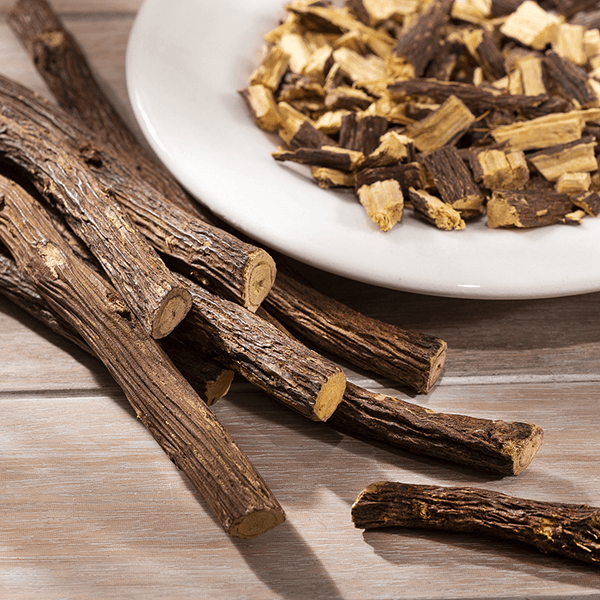
When formulators work with glabridin powder, the first obstacle they usually face is not efficacy — it is getting the ingredient to stay evenly dispersed in an emulsion. Glabridin powder (CAS 59870-68-7), extracted from Glycyrrhiza glabra licorice root, is a lipophilic isoflavan that inhibits tyrosinase activity and reduces melanin synthesis. Its IC50 for tyrosinase inhibition is significantly lower than that of kojic acid and arbutin. However, because it is insoluble in water, incorporating it into water-continuous or O/W emulsion systems requires a deliberate formulation strategy. This article walks through the science and practical solutions.
Understanding Glabridin Powder and Its Role in Cosmetics
What Makes Glabridin a Priority Brightening Active
Glabridin is a solid powder that ranges in color from light brown to white. Its molecular formula is C₂₀H₂₄O₄, and its molecular weight is 324.37 g/mol. It is between 10% and 98% pure according to HPLC. The purer the powder is, the whiter it is. When it's 90–98% pure, it's pretty much white. It melts between 154 and 155 °C and is easy to dissolve in ethanol, propylene glycol, and 1,3-butylene glycol but not water. These physical facts guide every choice a scientist makes about a formula.
Efficacy Profile That Justifies the Investment
Glabridin not only makes skin brighter, but it also lowers inflammation, keeps cells from getting hurt, and kills microbes. Through arachidonic acid pathways, it stops redness caused by UVB rays. This makes it perfect for the "brightening plus sensitive-skin" setting. It doesn't hurt cells as much as hydroquinone does.
At the same concentrations that brighten, these chemicals are less likely to irritate the skin than niacinamide, according to data that has been made public. It comes from Glycyrrhiza glabra roots and doesn't contain any GMOs, chemicals, or fake colors, so it's a good choice for small beauty brands that say they believe in clean beauty.
Purity Grades and Formulation Implications
Glabridin powder from Bioway comes in grades of 10%, 40%, 90%, and 98%. All of these grades have been checked by HPLC. The 40% grade is a brownish-white extract that has flavonoids from licorice in it. Colored creams and body lotions that don't need too much color can use it. For clear serums, ampoules, or any other recipe where color interference hurts the look, the 90–98% grades of this product come as almost-white powder. It saves a lot of money in the long run to pick the right grade at the start.
Solubility Challenges in Cosmetic Emulsions: Causes and Principles
Protein Content and Molecular Profile
Why Glabridin Resists Aqueous Dispersion
Glabridin is very lipophilic because its logP value is high. It's not possible for the molecule to fit in the water-based continuous phase at useful amounts in a normal O/W emulsion. These amounts are normally between 0.01 and 0.05% w/w in finished goods. It is possible for particles that haven't been dissolved to stick together without pre-solubilization. This can cause spots to show up, rough skin, and uneven active release. The molecule stays mostly neutral at beauty pH ranges (5.0–7.0) with a pKa of 9.66. This means it doesn't give off any ions that would help it breakdown in water.
Factors That Compound Instability
Instability is made worse by more than just the solubility problem because of the following formulation variables:
- • Oxidation sensitivity: Glabridin oxidizes on exposure to oxygen, leading to progressive yellowing. Formulators must add chelating agents (e.g., disodium EDTA) and antioxidants (e.g., tocopherol or sodium metabisulfite) to protect the active.
- • pH drift: At pH above 7.0, molecular degradation accelerates. Maintaining the finished formula between pH 5.0 and 6.5 is standard practice.
- • Temperature during processing: Glabridin's hygroscopic nature means moisture uptake during manufacturing can trigger localized precipitation if the emulsion is not processed carefully below 50 °C after active addition.
Particle Size and Emulsifier Selection
Grinding or spray drying the pieces makes them smaller before putting them in. This makes more surface area, which speeds up the process of dispersion. The emulsifier HLB value needs to match the polarity of the oil phase when glabridin is dissolved in lipid carriers. For the most part, nonionic emulsifiers like PEG-100 stearate or cetearyl glucoside work better with chelating agents that keep things from oxidizing than ionic systems do.
Effective Methods to Incorporate Glabridin Powder into Cosmetic Emulsions
If you mix glabridin powder into water without treating it first, problems will develop within weeks, such as uneven distribution, reduced solubility, and physical instability. People have found that the following steps improve both the dispersion quality and the product's shelf safety.
Pre-Dissolution in Polyol Solvents
This method is easy for most R&D labs to use. It involves slowly heating glabridin to 40–45 °C while dissolving it in 1,3-butylene glycol or propylene glycol at a ratio of 1:100 (1 part glabridin to 100 parts polyol). After that, the polyol solution is slowly added to the water phase while the whole thing is being stirred. So, the crystals don't form, and the active is spread out as a fine molecular dispersion instead of a solution.
Nanoemulsion and Microemulsion Systems
Nanoemulsions, which are made by homogenizing or microfluidizing with high pressure, make glabridin much easier for the body to use. They do this by creating a solid oil-in-water matrix where the active ingredient is spread out in the lipid phase. Studies using similar lipophilic actives show that they are two to four times better at getting into the skin than regular emulsions. Medium-chain triglycerides (MCT) and polysorbate-80 can be combined to make microemulsions that are stable at high temperatures. This makes them perfect for high-end whitening serums that need to last for 24 months.
Encapsulation Technologies
Glabridin is kept safe from oxidation and released slowly when it is put inside liposomes and cyclodextrin. An inclusion complex is made when beta-cyclodextrin and the isoflavan ring system join together. In this way, the hydrophobic part is hidden, and a complex is formed that can dissolve in water. Bioway has the ability to do both nano-encapsulation and liposome encapsulation in-house. This means that these shapes can be bought with the raw powder. This helps OEM partners speed up the development process.
Comparing Glabridin Powder With Alternative Skin Brightening Agents
Efficacy and Concentration Requirements
Research that has already been released on tyrosinase decrease shows that glabridin is a lot stronger than kojic acid and alpha-arbutin. For alpha-arbutin to work, a finished formula needs to have 1% to 2% w/w of it. For glabridin, 0.01% to 0.05% w/w is enough to do the same thing. It's the concentration difference that changes the cost-per-batch calculations. This difference may make up for the fact that 90% glabridin is more expensive as a raw material than arbutin or niacinamide (about USD 800–1,500/kg).
Solubility Profiles Across Competing Actives
Niacinamide and kojic acid can both dissolve in water, which makes it easy to mix them with systems that use water. But this also means that they can be broken down by water and, in the case of niacinamide, can change at high temperatures into nicotinic acid. When it comes to reactive instability, vitamin C compounds are in a lot more trouble than glabridin. Even though it takes more work to add glabridin, the fact that it is lipophilic saves it in oil-phase systems and lipid-based delivery vehicles that don't have any water-based breakdown routes.
Glabridin Powder vs. Liquid Licorice Extracts
Standardized glabridin powder at 40% or 90% HPLC always has the same amount of active ingredient from batch to batch. This isn't possible with liquid licorice extracts because the yields change. In powder format, OEM brands can show proof and consistency that they can make claims about how well their products work and do repeat production runs. This is important for regulatory filings. It has the INCI name "Glabridin", COA data for heavy metals (<10 ppm), bacteria counts (<1,000 cfu/g), and pesticide residues tested to European Pharmacopoeia 2000 standards.
Procurement and Quality Assurance of Glabridin Powder
Certifications That Signal Supply Integrity
If you want to buy glabridin powder, the approval stack is just as important as the price. Bioway has several licenses, including cGMP, ISO 9001, ISO 22000, HACCP, FDA, FSSC 22000, HALAL, KOSHER, BRC, and USDA/EU Organic. This proof shows that the manufacturing rules are looked at by groups outside the company, not just the company itself. Brands that want to sell in the EU should also make sure that any potential suppliers can follow REACH rules and have a CPNP notice ready.
COA Parameters Formulators Should Verify
For every batch of glabridin powder that comes in, there should be a full COA. The HPLC test (≥40%, ≥90%, or ≥98% depending on grade), the amount lost during drying (≤3.0%), the amount of residue left on fire (≤0.1%), the amount of heavy metals (<10 ppm), the amount of arsenic (<2 ppm), the total plate count (<1,000 cfu/g), the amount of yeast and mold (<100 cfu/g), and the results for E. coli and Salmonella are the most important things. How uniform the color and smell are from batch to batch also affects how uniform the final product is. It needs to be put down in the record of the seller qualification.
Sample-to-Scale Procurement Timeline
It's easy to send lab results quickly within the US thanks to Bioway's 3,000-square-meter US warehouse. Usually, 5–20 g can be sent within 48 hours of a request. This makes the early-stage possibility window much shorter. For high-purity grades, the first order quantities are usually between 1 kg and 10 kg once the sample has been approved. These amounts can go up to 20 to 100 kg per month once the formula is locked in. Brands need to keep their schedules on track and avoid last-minute supply problems by being clear about wait times at every stage.
Conclusion
Incorporating glabridin powder into cosmetic emulsions is solvable with the right combination of pre-dissolution technique, emulsifier selection, encapsulation format, and oxidation protection. The ingredient's potency at low concentrations, clean regulatory profile, and dual whitening-plus-anti-inflammatory mechanism make it one of the most defensible brightening actives available to formulators today. Success depends less on the molecule itself and more on sourcing a verified, batch-consistent grade from a supplier who can provide technical documentation alongside the material.
FAQ
Q1: What concentration of glabridin is recommended in a finished brightening serum?
Most published formulation guidance places effective usage at 0.01–0.05% w/w in the finished product. At 90% or 98% purity, this translates to very small raw material quantities, which means cost-per-unit remains controlled despite the higher price per kilogram.
Q2: Why does a lotion containing glabridin turn yellow over time?
Yellowing signals oxidative degradation. It occurs when chelating agents and antioxidants are absent from the formula, or when pH drifts above 7.0. Including disodium EDTA and tocopherol in the formula and maintaining pH between 5.0 and 6.5 substantially slows this reaction.
Q3: Can glabridin powder be combined with retinol in the same formula?
Yes, the two actives are chemically compatible. However, both are potent; encapsulation of one or both actives is advisable to manage potential sensitivity. Glabridin's anti-inflammatory activity may partially offset the transient irritation some users experience with retinol.
Q4: How does purity grade affect solubility behavior?
Higher purity grades (90–98%) contain fewer co-extracted licorice compounds, so the active concentration per gram is higher, but the total flavonoid matrix is narrower. This means the pre-dissolution step must be performed with equal care regardless of grade — the lipophilicity is an intrinsic property of the glabridin molecule itself, not a purity artifact.
Partner With BIOWAY for Certified Glabridin Powder Supply
Bioway Industrial Group Ltd makes four different HPLC types of glabridin powder: 10%, 40%, 90%, and 98%. Their 50,000-square-meter GMP-certified factory is in Shaanxi Province, and they also have a 3,000-square-meter warehouse in the US so they can quickly ship to North America. We offer full COA documentation, third-party tyrosinase inhibition data, and one-on-one formulation consultation for R&D teams. It is safe to buy glabridin powder from us. Take a look at biowaynutrition.com or email grace@biowaycn.com to get a 5 g sample right now.
References
1. Nerya, O., Vaya, J., Musa, R., et al. — Journal of Agricultural and Food Chemistry, 2003.
2. Yokota, T., Nishio, H., Kubota, Y., & Mizoguchi, M. — Pigment Cell Research, 1998.
3. Damle, M. — Chronicles of Young Scientists, 2014.
4. Muangnoi, C., Chingsuwanrote, P., Praengamthanachoti, P., et al. — Inflammation, 2012.
5. Jiang, H., et al. — International Journal of Pharmaceutics, 2019.
6. Smaoui, S., et al. — Industrial Crops and Products, 2021.
Contact Us
Grace HU (Marketing Manager) grace@biowaycn.com
Carl Cheng ( CEO/Boss ) ceo@biowaycn.com
Website: www.biowaynutrition.com
Post time: Nov-09-2026


