
Introduction
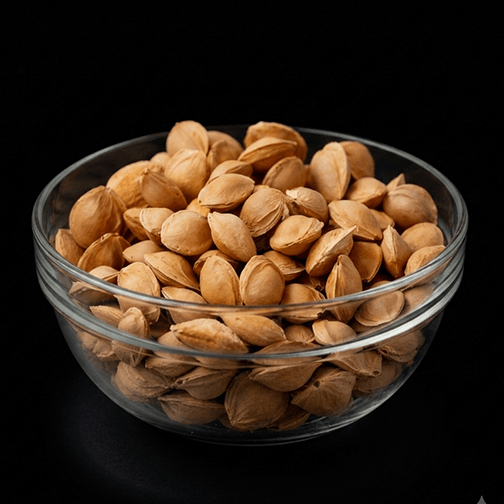
Many people in Traditional Chinese Medicine have used apricot seeds to treat lung and stomach issues, as well as inflammation, for hundreds of years. They especially like the bitter kind that comes from Prunus armeniaca L. New nutrition information is mixed with old information in Organic Bitter Apricot Seed Powder today. It gives B2B buyers a standard item that can be tracked and meets strict quality standards worldwide. Around the world, people want real botanical ingredients that are based on both traditional knowledge and scientific proof. If manufacturers, formulators, and distributors want to stay ahead in the health and wellness markets, they need to know how to get this ingredient and its medical history.
Understanding Organic Bitter Apricot Seed Powder in Traditional Chinese Medicine
What Makes Bitter Apricot Seeds Unique in TCM?
Unlike their sweet cousins, bitter apricot seeds (called "Xing Ren") are used in Traditional Chinese Medicine in a different way. There is more of the bitter cyanogenic glycoside amygdalin in it, which makes it more healing when used properly. Old TCM books say that bitter apricot kernels have a downward nature and work on the lung and big gut channels to help with coughing, dry skin, and easy bowel movements. These bioactive chemicals are safe in the current Organic Bitter Apricot Seed Powder because it is processed in a way that keeps the usefulness while removing extra toxins.
Traditional Therapeutic Applications
In the past, TCM doctors used bitter apricot seeds to treat lung problems like asthma, stuffy noses, and coughs that made thick mucus. People also liked the kernels because they were light laxatives that helped a lot with constipation caused by dryness or heat waves. Some ways to make it were to boil it with other herbs to make a soup, cook it to make it less bitter, or grind it into a powder that was easier to swallow. In ancient times, the powder was used in ways that are similar to how it is used today in products to help the gut and lungs.
Nutritional and Bioactive Profile
Apricot kernel powder has amygdalin in it, as well as a lot of protein (20–25%), fiber, vitamin E, B-complex vitamins, and minerals like iron, zinc, and calcium. Because it has oleic acid and linoleic acid in it, the fatty layer is oil-like. Antioxidants have been found in the form of flavonoids and polyphenolic substances. This backs up the normal use for diseases that are linked to inflammation. This full phytochemical matrix is very helpful for buying managers who want to find ingredients that can be used in beauty products or healthy foods.
Safety Considerations and Processing Standards
When you handle raw sour apricot seeds, be careful because they have a lot of amygdalin in them. The right way to heat treat and debitter metals lowers the amount of cyanide intermediates to a safe level, which, for food-grade uses, is generally less than 10 parts per million. OurOrganic Bitter Apricot Seed Powder is made using approved methods and tested in small amounts to make sure it meets the highest standards for food safety around the world.
With these specs, the amount of amygdalin stays at a safe and effective level. This strikes a balance between practicality and customer safety. It should be made clear that pregnant women and people with certain metabolic conditions shouldn't use it, and that doses shouldn't go over what is known to be safe, which is generally between 3 and 9 grams per day in traditional use.
Comparative Analysis for International B2B Buyers: Organic Bitter Apricot Seed Powder vs Alternatives
Chemical Composition and Potency Differences
There are a lot of different apricot-based goods that business buyers can choose from. The sweet apricot seed powder (Prunus armeniaca var. ansu) doesn't have much amygdalin and is mostly used as a mild-tasting, high-nutrient food item. This kind is good for you in general, but it doesn't help you breathe like the sour kind does. You lose the protein, fiber, and bioactives that dissolve in water when you cold-press or use a solution to get apricot kernel oil.
You keep the fatty acids and vitamins that dissolve in fat. The plant that almond powder comes from is the same plant, but it tastes and has a different set of nutrients. If people who make medicines want to get all the health benefits of bitter apricot seeds, they need to use whole-kernel bitter apricot seed powder instead of split ones because it has a chemical matrix that works well with other ingredients.
Application Suitability Across Industries
Bitter apricot seed powder has been used for a long time and for good reason. It helps with stomach and lung issues. This is good for businesses that make vitamins. It can be used in anti-aging serums and healing creams because it contains antioxidants and moisturizing fatty acids. The powder is easy to mix with other things to make pills, tablets, drink mixes, and skin products because the pieces are small (usually 80–100 mesh). Sweet apricot powder is great for cooking and making protein-rich foods, and apricot kernel oil is great for oil-phase makeup. Source teams can pick ingredients that fit with how the product is positioned and what the target market wants when they know about these application settings.
Supplier Evaluation Criteria
The first thing you should do to judge quality is to see if it is organically approved. USDA and EU Organic standards ensure cultivation without using GMOs or man-made chemicals. This meets the requirements for a clean badge. Certificates of analysis should show how much of the active ingredients (amygdalin, total phenolics) are present, as well as the physical qualities (moisture content, mesh size), heavy metals, chemical residues, and bacteria counts. It is important that providers can handle a lot of work.
Production levels above 6,000 tons per year show that supply lines are stable and batches are always the same. To be competitive in price, crops that are certified organic usually cost 15–30% more than regular ones. This depends on how many are harvested and how hard they are to process. That way, they can meet the needs of many customers, the best companies let you change things like the particle size, the way the package is set up, and even add your own label.
Procuring Organic Bitter Apricot Seed Powder: A Global B2B Buyer's Guide
Essential Certifications and Quality Markers
The first thing you should do to find reliable suppliers of organic bitter apricot seed powder is to look at their list of certifications. There are more than just basic organic certifications that you should look for. For example, ISO22000 for food safety, HACCP for risk management, GMP for pharmaceutical-grade production, and Halal or Kosher standards for some market entry are all examples of full quality management systems. Besides FSSC 22000 and BRC approval, our building also has all of these other badges, which show that it meets international audit standards.
A Certificate of Analysis (COA) should be included with each batch. The COA should have HPLC chromatograms for active chemicals, ICP-MS data for heavy metals, and GC-FID readings for pesticide screens. Government rules and efforts to make brands more open can only work if suppliers give full tracking papers, from the organic farm where the food came from to the processing lot numbers.
Understanding MOQ, Pricing, and Logistics
The minimum order amount is based on the provider's system and the way the market is set up. When it comes to well-known companies with their own production lines, the MOQs for the first order is usually between 100 kg and 500 kg. When you buy more than 1 ton, you get a discount. Prices are affected by many things, including how much it costs to get organic approval, how the crop seasons change, how hard it is to process the food, and other practical problems.
Organic sour apricot seed powder that is good for medicine costs $15 to $30 per kilogram FOB China. It takes 7 to 14 days and costs an extra $3 to $5 per kilogram to ship by air. It costs less per unit but takes 30 to 45 days to ship by water. People who have done business with each other before might be able to work out net-30 terms. Most of the time, you have to pay a 30% deposit and then the rest of the amount against the bill of lading.
Mitigating Procurement Risks
It's important for the supply chain to work well that sellers are safe and honest. Quality methods and building conditions are being checked, as shown by audit records from outside inspection groups. You should ask for stable data that tells you how long the product will last in different store conditions. Usually, it will last 24 months at room temperature in sealed packaging.
Make quality agreements that spell out the boundaries of the requirements, the sample methods, and the ways to settle disputes. To keep things consistent while lowering risk, it's a good idea to keep your key relationships with your suppliers while expanding your list of suppliers. Finding raw materials is easier for us because we don't have to depend on changes in the stock market from our 100-hectare organic farming base on the Qinghai-Tibet Plateau. This makes it easier to build long-term relationships.
How to Use Organic Bitter Apricot Seed Powder in Products: Application Insights
Dietary Supplement Formulation Strategies
To make it easy to take, bitter apricot seed powder is best when it is made into capsules or pills. Because the material is bulky and doesn't stick together well, it can be straight compressed or put into capsules that hold 500 mg to 1,000 mg per serve. Powder is often mixed with other plants that are good for the lungs, like thyme extract, licorice root, or mullein leaf. This is done so that the blends work better together.
For powdered supplement mixes, it's important that the particles are all the same size. For smoothie blends or functional beverage recipes, 95% going through 80-mesh makes sure that the texture is smooth. You can hide a taste by mixing it with naturally sweet foods like monk fruit or adding it to chocolate-flavored protein shakes, where the bitterness goes well with the cocoa notes.
Cosmetic and Personal Care Applications
Because the powder is an antioxidant, especially because it has vitamin E and polyphenolic chemicals, it can be added to skin care items that help fight aging. Use between 2% and 5% of this ingredient in scrubs, masks, or serums that clean the face. The fine particles will gently get rid of dead skin cells and help the body's chemicals as well.
The amount of fatty acids in body lotions and creams that moisturize helps the skin's defense system. Mixing the powder with glycerin or propylene glycol first keeps it from sticking together when it's added to the water phase. This makes the suspension stable in liquid recipes. When picking a way to keep the powder fresh, you should think about how many microbes are already in it. Most of the time, bacteria must not be present and plate numbers must be less than 10,000 CFU/g.
Regulatory Compliance Across Markets
In the US, bitter apricot seeds are usually thought to be safe to use in food, but they only have a small amount of amygdalin. Goods are checked by the FDA to make sure they don't have too many cyanide ingredients. New food rules in Europe let them be used with certain safety paperwork. For each kind of makeup, there are different rules. Like, the EU Cosmetics Regulation says that safety tests must be done, but plant-based products that have been used before are usually okay.
As part of the export records, there should be a Certificate of Free Sale, a COA, an MSDS, phytosanitary certificates, and copies of organic licenses. Our regulatory relations team helps people get things through customs and get permission to sell them in many countries around the world by giving them full paperwork packages.
Trends and Future Outlook of Organic Bitter Apricot Seed Powder in Global Markets
Market Growth Drivers
About $8 billion worth of plant products, including organic bitter apricot seed powder, are sold around the world every year, and that number continues to grow by 8 to 10 percent annually. The lung health and immunity support groups are the ones that are growing the fastest. There is a need for real plant ingredients that have been used in medicine for a long time because more and more people are interested in traditional medicine systems, especially TCM and Ayurveda.
It is harder to get organic approval because of the clean-label trend. This gives sellers who already have it an edge in the market. Food-grade plants that can be used for both health and beauty are being used by more and more makeup brands. This means that flexible ingredients like apricot kernel powder can be sold in more places.
Sustainability and Ethical Sourcing Imperatives
Government, society, and the environment (ESG) issues are now taken into account when big companies around the world pick which providers to work with. Our 100-hectare organic planting base is a great example of environmentally friendly farming. We use integrated pest control to keep the land healthy, water-saving systems that work well in high-altitude growing areas, and crop rotation to keep the land healthy.
It is possible to see the whole supply chain, from the farm to the finished product, thanks to blockchain technology. Customers and government agencies are paying more attention to ethical source problems. Fair labor practices that are backed by social compliance checks can help with these issues. If a seller is ESG aligned, brands that care about quality will pay more and buy from them more often.
Strategic Recommendations for Supply Chain Optimization
Working with providers who can grow, handle, and test goods all under one quality control system is what vertical integration means. People who buy from other businesses should think about this. This structure makes each batch more accurate and lets goods be made just the way the customer wants them. Set up framework deals with varying claims of volume and price changes based on clear market indices to get ready for price changes that might happen because of how the harvest is going.
You can help your suppliers get better by working with them to create new ways to process your products, paying for clinical research to back up claims of success, or putting together legal dossiers for new market entries. These strategic partnerships turn transactional buying into competitive benefits by giving you access to unique formulas and health claims that have been proven to be true.
Conclusion
Bitter apricot seeds have been used in Traditional Chinese Medicine for a long time and can now be handled in a way that ensures all the ingredients are the same and are certified organic. This makes Organic Bitter Apricot Seed Powder a great choice for picky B2B buyers. This plant-based ingredient is versatile and can be used in many different goods, from new skin care products to supplements that help the lungs. In terms of clean signs and government rules, it meets the requirements. More and more, markets around the world want to see proof of origin, provenance, and scientific accuracy. Because of this, it is helpful to work with well-known suppliers who can offer full licenses, stable supply, and expert support. New goods can be made in the health, beauty, and leisure businesses when old knowledge is combined with current quality control.
FAQ
Q1: What distinguishes organic from non-organic bitter apricot seed powder?
When foods are certified organic, it means they were grown without using synthetic chemicals, pesticides, or organisms that have been genetically changed. There will be fewer drug leftovers, which is very important for sensitive uses like making medicine or feeding babies. Hexane and other petrochemicals that are close to it can't be used for solvent extraction, according to rules for organic processing.
Q2: How should manufacturers address amygdalin content in product labeling?
Placing people based on their usefulness and their job to keep everyone safe is balanced by good communication. Product labels should say how much of the product is in each dose, if biological standardization is needed, and any warnings about how much of the product should be taken each day and who shouldn't take it.
Q3: What analytical methods verify supplier quality and purity?
High-Performance Liquid Chromatography (HPLC) checks the amount of polyphenols and amygdalin that are present. We can use ICP-MS (Inductively Coupled Plasma Mass Spectrometry) to find heavy metals like lead, cadmium, arsenic, and mercury. Many kinds of chemical residue can be found with GC-FID or GC-MS. For microbial tests, the USP standards are used for full plate count, yeast/mold, coliforms, and viruses.
Partner With BIOWAY for Premium Organic Bitter Apricot Seed Powder Supply
For more than 15 years, BIOWAY INDUSTRIAL GROUP LTD has been a producer of organic bitter apricot seed powder, a fully integrated. We are in charge of our 100-hectare organic farms on the Qinghai-Tibet Plateau and our 50,000-square-meter processing plant in Shaanxi Province. There are ten specific production lines that make sure the quality is always the same. These include high-purity extraction systems and cosmetic-grade lines. A lot of different certificates back them up, such as USDA/EU Organic, ISO22000, GMP, HACCP, Halal, and Kosher.
We can keep good track of our stock and get goods to customers in North America quickly because our U.S. warehouse is 3,000 square meters and can hold more than 6,000 tons of goods per year. If you need small samples to help you make a new product or want to buy a lot of something with certain particle sizes, our expert team can help you come up with the right recipe. Write to grace@biowaycn.com to tell them what you need and to ask for scientific proof that our product is very safe and pure.
References
1. Bensky, D., Clavey, S., & Stöger, E. (2004). Chinese Herbal Medicine: Materia Medica, 3rd Edition. Seattle: Eastland Press.
2. Chang, H. M., & But, P. P. H. (Eds.). (1986). Pharmacology and Applications of Chinese Materia Medica, Volume 1. Singapore: World Scientific Publishing.
3. Liu, Y., & Zhang, H. (2015). Chemical composition and bioactivity of apricot kernel: A review. International Journal of Food Science and Technology, 50(6), 1373-1381.
4. Yildiz, H., & Ercisli, S. (2011). Apricot kernel: Physical and chemical properties and toxicological concerns. Journal of Food, Agriculture & Environment, 9(3-4), 108-111.
5. Zhou, X., & Ling, Y. (2016). Traditional Chinese medicinal herbs and respiratory diseases: From basic research to clinical application. Evidence-Based Complementary and Alternative Medicine, Article ID 7238464.
6. World Health Organization. (1999). WHO Monographs on Selected Medicinal Plants, Volume 1. Geneva: World Health Organization Press.
Contact Us
Grace HU (Marketing Manager) grace@biowaycn.com
Carl Cheng ( CEO/Boss ) ceo@biowaycn.com
Website: www.biowaynutrition.com
Post time: May-20-2026