
Introduction
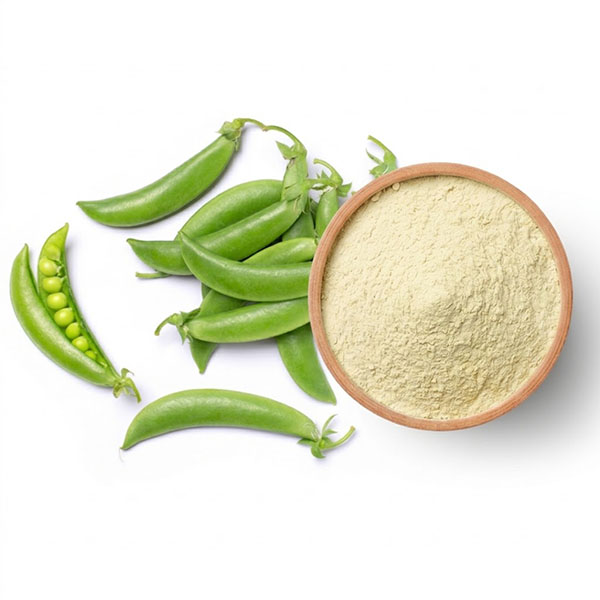
Organic pea peptide is ideal for vegan supplements. Enzymatic hydrolysis of non-GMO yellow peas yields this plant-based substance with a complete amino acid profile, improved bioavailability, and hypoallergenicity, without animal products. Certified organic origin and clean-label appeal make Organic Pea Peptide a a solid, ethical choice that meets vegan formulation standards and delivers functional benefits for muscle recovery, nutritional wellness, and sustainable production in today's mindful market.
Understanding Organic Pea Peptide: Composition and Benefits
What Exactly Are Pea Protein Peptides?
Organic pea peptides are more advanced than plant proteins. Whole pea proteins are hydrolysed into 2–50 amino acid chains via controlled enzymatic hydrolysis. The input material is converted into highly accessible peptides with molecular weights below 1,000 Daltons for rapid absorption without digestion.
Our 85% Organic Pea Peptide survives biochemical separation to produce a white to light-yellow powder rich in eight key amino acids. Organic Pea Peptides are made without solvent extraction, preserving nutritional content and removing soy and gluten allergens.
Nutritional Profile and Functional Advantages
Plant-based peptides are ideal for vegan formulations due to their nutritional value. These peptides provide concentrated nourishment in low-fat, low-calorie formulations with over 80% protein by dry weight. BCAAs like leucine, isoleucine, and valine are essential for muscle protein synthesis and recovery and are found throughout the whole amino acid spectrum.
Beside nutritional value, peptides have bioactive features such ACE inhibitory action that improve cardiovascular health and antioxidant capacity that protect cells from oxidative stress Organic Pea Peptides are hypoallergenic and free from the top eight allergens, making them safe for children and pregnant women.
Digestibility and Absorption Efficiency
Peptides are digestible, unlike complete protein isolates. Standard plant proteins need extensive enzymatic digestion in the gastrointestinal system before absorption, which may cause bloating or digestive discomfort. Pre-digested peptides use Pept-1 for fast absorption, bypassing this step.
Their effectiveness makes them appropriate for therapeutic nutrition, senior care, and sports recovery goods where amino acid availability improves performance. The high Nitrogen Solubility Index (>98%) allows perfect dissolving in acidic functional fluids and neutral protein drinks without precipitation or textural difficulties that affect typical plant proteins.
Organic Pea Peptide and Vegan Supplement Formulation: Compatibility and Considerations
Verifying Vegan Authenticity Through Sourcing
Sourcing transparency remains paramount for vegan supplement manufacturers. Authentic Organic Pea Peptides originate from certified organic yellow peas cultivated without synthetic pesticides or genetically modified organisms. The enzymatic hydrolysis process employs plant-derived or microbial enzymes rather than animal-based proteases, maintaining strict vegan compliance throughout production.
USDA Organic, EU Organic, Kosher, and Halal certifications verify vegan and organic integrity. Manufacturers should obtain farm-to-facility supply chain records, enzyme origin certifications, and third-party audit reports for traceability. This due diligence preserves company image and ensures goods fulfil vegan customers' increasingly sophisticated ingredient sourcing standards.
Functional Attributes Enhancing Formulation Flexibility
Organic Pea Peptides have several uses beyond protein supplementation. Their high solubility in pH ranges 2.0–10.0 allows them to be added to clear beverages, acidified sports drinks, and transparent protein waters without clouding or sedimentation. Plant-based protein bars and nutritious smoothies have creamy mouthfeel without dairy-derived stabilisers thanks to emulsification.
Pasteurisation and UHT processing do not denaturate baked products and energy snacks due to binding capacity and thermal stability. Formulators may use a single ingredient to create ready-to-drink drinks, quick powders, fortified biscuits, and beauty supplements. This streamlines procurement and inventory management.
Addressing Flavor Challenges and Palatability
Flavour greatly affects vegan supplement acceptability. Raw pea proteins have "beany" or earthy flavours that reduce taste. Steam deodorisation, membrane filtering, and targeted enzymatic treatment remove unpleasant flavours in grade peptide products. Hydrolysis decreases protein flavour intensity due to molecular breakdown.
When making completed goods, Organic Pea Peptides with natural vanilla, chocolate, or berry flavours hide lingering notes. Premium-grade peptides may be used in unflavoured therapeutic nutrition applications that need taste neutrality. Sensory testing during supplier selection assures approved items fulfil organoleptic requirements for market launch and recurrent purchasing.
Comparative Analysis: Organic Pea Peptide vs Alternative Protein Sources
Plant-Based Peptides Versus Whey Protein
The comparison between plant peptides and dairy-derived whey reveals distinct advantages for vegan formulations. While whey offers rapid absorption and complete amino acid profiles, it excludes the growing consumer segment avoiding animal products due to ethical, environmental, or dietary reasons. Organic Pea Peptides deliver comparable absorption rates through their low molecular weight structure while maintaining allergen-free status crucial for lactose-intolerant or dairy-sensitive populations.
Environmental impact evaluations show lower carbon and water footprints for pea farming than dairy production, coinciding with millennial and Gen Z customers' sustainability goals. In terms of procurement, Organic Pea Peptides have more consistent pricing and supply chains less susceptible to dairy commodity market volatility.
Differentiation Among Plant Protein Sources
Organic Pea Peptides outperform soy, rice, and hemp in plant-based categories. Despite their comprehensive amino acid profiles, phytoestrogen and allergy concerns make consumers resistant to soy proteins. Rice proteins often need lysine supplements to establish appropriate amino acid balance.
Hemp proteins are nutritious yet subject to regulatory issues and premium prices in certain regions. Pea-based solutions are non-allergenic, have balanced amino acid content when correctly processed, regulatory purposes, and have a competitive bulk price, allowing variable formulation techniques. Peas' clean identity as healthful veggies boosts customer confidence compared to other protein sources.
Powder Form Variations and Application Versatility
Understanding pea protein powder types improves formulation. Standard pea protein isolates include complete proteins with molecular weights above 10,000 Daltons, adequate for basic replenishment but difficult to dissolve and absorb. Enzymatic pre-digestion of organic pea peptides reduces molecular weight to around 1,000 Daltons, enhancing bioavailability and mouthfeel.
Unlike "collagen peptides," which are animal-derived and incompatible with vegan formulations, Organic Pea Peptides improve skin health and connective tissue via amino acids. Cost-efficiency research shows that although peptides cost more than basic isolates, their functional efficacy frequently permits lower inclusion rates in final formulations, compensating raw material cost disparities and improving consumer experiences.
Procurement Insights: Sourcing Organic Pea Peptide for Vegan Supplement Production
Essential Supplier Certifications and Credentials
Rigorous supplier evaluation protects product integrity and brand reputation. Prioritize manufacturers holding comprehensive certifications including NOP and EU Organic for organic verification, BRC and HACCP for food safety management, ISO22000 for quality systems, and Kosher/Halal for religious dietary compliance. Non-GMO Project Verified status provides additional assurance for North American markets where genetic modification concerns influence purchasing decisions.
Request certificate copies with current validity dates and scope specifications confirming coverage of Organic Pea Peptide products specifically, not merely general facility certifications. Audit reports from third-party certification bodies offer transparency into manufacturing practices. Suppliers operating vertically integrated operations—controlling cultivation, processing, and quality testing—typically deliver more consistent quality and traceability compared to brokers or distributors lacking direct production oversight.
Pricing Structures and Minimum Order Quantities
The price of Organic Pea Peptides depends on raw material quality, processing complexity, and certification. Certified organic peptides cost $8–15 per kilogram for bulk purchases, with premium grades costing more due to protein content, flavour neutrality, and functional performance. Initial trial purchases typically need 100-500 kg, increasing to 7-14 tonnes for best freight economics (7 tonnes in 20-foot containers, 14 tonnes in 40-foot containers).
Annual supply agreements with volume guarantees generally provide preferred pricing and supply continuity for production planning. Solubility or flavour profiles may justify a higher price due to enhanced end product quality, reduced flavour masking expenses, or premium positioning.
Logistics and Quality Assurance Protocols
Manufacturing effectiveness and product consistency rely on supply chain stability. Organic peptide orders require 4-8 weeks due to manufacturing, quality testing, and international shipping. US-based suppliers may reduce North American client lead times to 1-2 weeks, improving inventory flexibility. Multi-wall paper shopping bags with polyethylene lining minimise moisture absorption during transit and storage. Bulk 10-kilogram bags are suitable for high-volume applications, while standard ones are simple to handle.
Protein content, AA profiles, bacterial testing, heavy metal assessments, and pesticide residue testing COAs should accompany each shipment. Before bulk shipping, organoleptic testing, solubility analysis, and performance validation minimise costly production delays from off-spec materials.
Why Choose Organic Pea Peptide for Your Vegan Supplement Product Line?
Market Dynamics Driving Plant-Based Protein Demand
The vegan supplement market experiences exceptional growth trajectories, particularly across North American and European consumer bases. Market research indicates plant-based protein segment expansion exceeding 10% annually, driven by flexitarian dietary patterns, environmental sustainability priorities, and health optimization trends. Consumers increasingly seek products combining ethical sourcing with functional performance, creating ideal conditions for Organic Pea Peptide adoption.
The clean-label movement emphasizes recognizable ingredients with minimal processing, positioning Organic Pea Peptides as superior alternatives to synthetic amino acids or heavily processed isolates. Regulatory environments increasingly favor plant-based ingredients through sustainability incentives and reduced scrutiny compared to novel synthetic compounds, streamlining product approval timelines and market entry strategies.
Performance Validation Through Research and Application Evidence
Clinical studies support pea-based protein for muscle growth and recovery. Organic Pea Peptides are acceptable performance nutrition supplements since studies show pea and whey proteins have similar muscle protein synthesis rates when matched for leucine concentration. Hydrolysed peptides' fast absorption aids post-workout recovery, when amino acid availability drives anabolic signalling.
Research supports broader applications beyond sports nutrition: enteral feeding formulas use low viscosity and pre-digested constituents for patients with compromised intestines; geriatric nutrition products use easy absorption for elderly clients with reduced enzymatic activity; and weight management formulas use high satiety per calorie ratios. Established brand client testimonies prove market popularity across these broad applications, boosting new product development confidence.
Innovation Opportunities and Customization Potential
Organic Pea Peptides' adaptability allows product diversification and innovation. Custom blending with complementary plant proteins such as organic rice or hemp generates full amino acid matrices that solve methionine restrictions in pea-only formulations, attaining PDCAAS around 1.0. Private labelling allows firms to create unique formulas like organic recovery peptides for vegan athletes, beauty peptides which are for skin health, and clinical-grade peptides for medical nutrition.
Unlike typical plant isolates, peptide solubility allows clear protein waters and functional shots in functional beverages. Ingestable beauty supplements with Organic Pea Peptides and herbal extracts may support collagen with amino acids rather than synthetic collagen as nutrition and beauty merge. These innovation channels position early adopters to gain market dominance in developing subcategories with little competition and premium pricing.
Conclusion
Organic Pea Peptides are ideal for vegan supplement producers seeking high-performance, ethically sourced protein ingredients. Complete amino acid profiles, high bioavailability, allergen-free status, and genuine organic certification meet functional formulation needs and consumer values influencing purchase choices. Compared to other protein sources, Organic Pea Peptides provide competitive benefits in digestibility, sustainability, regulatory acceptability, and cost-effectiveness across different applications from sports nutrition to therapeutic feeding.
Successful procurement needs thorough supplier assessment concentrating on complete certifications, clear traceability, and stable quality assurance. The rising vegan supplement industry, underpinned by clinical proof and consumer uptake, offers attractive prospects for firms investing in Organic Peas Peptide formulations that combine real performance and ethical values.
FAQ
Q1: Can Organic Pea Peptides Completely Replace Whey Protein in Formulations?
Organic Pea Peptides are suitable whey replacements for most applications, especially when prepared for amino acid balance. Both have quick absorption and stimulate muscle protein synthesis, while Organic Pea Peptides are allergen-free and vegan for more consumers. Organic Pea Peptides and related plant proteins match whey's amino acid compositions. Matching leucine content across sources yields similar muscle-building results, establishing Organic Pea Peptides as acceptable alternatives.
Q2: What Allergen Risks Should Manufacturers Consider?
Organic Pea Peptides exclude milk, eggs, fish, shellfish, tree nuts, peanuts, wheat, and soy, the top eight allergens. Factory allergen control methods should avoid cross-contamination from other manufacturing lines. Requesting supplier allergen management paperwork and facility segregation assures allergy-free goods. Peas are hypoallergenic, making accidental allergic responses rarer than soy or wheat.
Q3: How Do Buyers Verify Organic and Vegan Certifications?
Request comprehensive copies of USDA Organic, EU Organic, and appropriate vegan certifications with validity dates and scope coverage to begin verification. Checking certificate numbers with issuing organisations verifies legitimacy. Organic and vegan processing processes are more transparent with third-party audits. Suppliers should offer enzyme origin evidence proving plant or microbial origins rather than animal derivation and complete traceability from certified organic farms to final processing.
Partner with BIOWAY for Premium Organic Pea Peptide Supply
BIOWAY INDUSTRIAL GROUP LTD offers certified 85% Organic Pea Peptides made to worldwide standards to boost your vegan supplement innovation. Our vertically integrated activities include 100 hectares of organic farming on the Qinghai-Tibet Plateau and 50,000 sf of GMP-certified enzyme hydrolysis facilities. With NOP, EU Organic, BRC, ISO 22,000, Kosher, Halal, and HACCP awards, we ensure brand integrity with consistent quality.
Our 35,000-square-meter US warehouse assures fast delivery and reduces inventory carrying costs, while our 15-year botanical extract R&D team offers technical formulation assistance. BIOWAY provides flexible MOQs, affordable pricing, and samples for complete assessment before committing to bulk Organic Peas Peptide powder for large-scale manufacturing or customised mixes for unique formulations.
As an experienced Organic Pea Peptide manufacturer, we understand the unique requirements of vegan supplement brands and invite you to contact grace@biowaycn.com to discuss how our premium ingredients can elevate your product line. Visit biowaynutrition.com to explore our complete portfolio and discover why leading vegan brands trust BIOWAY for their plant-based protein needs.
References
1. Journal of the ISO of Sports Nutrition. "Plant-Based Protein A Daily Dose and Muscle Protein Synthesis: A Comparative Analysis." 2021.
2. Food and Tech Research. "Enzymatic Hydrolysis on Pea Proteins: Functional Properties or Bioactive Peptide Production." 2020.
3. Dietary Reviews. "Digestibility and Absorption Mechanisms of Plant-Derived Peptides Versus Intact Proteins." 2019.
4. "Allergenicity Assessment of Pea Antibodies and Derived Peptides in Highly receptive Populations." 2022.
5. "Clean Label Trends in Protein, in particular, Supplementation: Consumer Priorities and Market Dynamics." 2023.
6. Critical Reviews in Food Science and Nutrition. "Comparative Sustainability of Animal and Bio-Based Protein Production Systems." 2021.
Contact Us
Grace HU (Marketing Manager) grace@biowaycn.com
Carl Cheng ( CEO/Boss ) ceo@biowaycn.com
Website: www.biowaynutrition.com
Post time: Sep-17-2026


