
I. Introduction
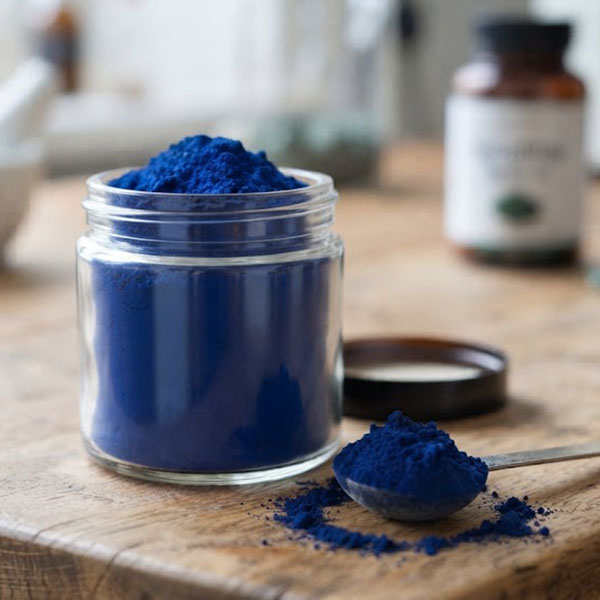
When evaluating natural blue-green algae ingredients for functional food formulations, understanding the distinction between organic phycocyanin and spirulina powder becomes essential. Organic phycocyanin represents a highly concentrated blue pigment-protein complex extracted through advanced membrane separation from certified organic spirulina, delivering exceptional color intensity and targeted bioactive benefits.
Spirulina powder, conversely, comprises the entire dehydrated algal biomass and offers a broad nutritional spectrum. Both originate from Arthrospira platensis, yet their processing, purity levels, and applications differ fundamentally—a critical consideration for procurement professionals seeking ingredients aligned with specific formulation goals and regulatory compliance standards.
Understanding Organic Phycocyanin and Spirulina Powder
What Defines Organic Phycocyanin?
Organic Phycocyanin is a rare and valuable ingredient that is made by carefully extracting the blue-colored protein from certified organic spirulina biomass. This extraction method uses physical membrane separation to ensure no liquid waste is generated and that the delicate protein structure is preserved. The powder that was made has a unique absorption peak at 618–620nm and dissolves very easily in water, turning into colloidal solutions very quickly without precipitation.
Premium-grade varieties have protein levels of 55% or more, and their color values are more than 360 units when tested at a 10% concentration (E618nm). The purity ratio (A620/A280) usually goes above 2.0, which means that other proteins aren't getting into it much. In our production, we use organic stabilizers like sodium citrate or trehalose at a concentration of about 5%. These keep the proteins from breaking down while they are being stored or shipped. These technical factors have a direct effect on the security of the formulation, the accuracy of dosing, and the performance of the end product in a wide range of settings.
Spirulina Powder Composition and Production
Spirulina powder is made from whole-cell biomass that was collected from Arthrospira platensis cultures that had been grown and then dried out using spray-drying or low-temperature processing. The powder that is made has about 60% protein, 24% carbohydrates, and 8% lipids. It also has minerals like iron and magnesium and vitamins B12 and K. Spirulina powder is useful for adding to food or making it healthier because it has a lot of different nutrients.
But when chlorophyll and other pigments are present, the color changes to a blue-green instead of the pure azure color that phycocyanin alone gives. The whole algae matrix has cell walls and nucleic acids, which may not be good for all formulations. Concerns about quality, like microcystin contamination and heavy metal buildup, require strict testing procedures, especially when buying for pharmaceutical or infant nutrition uses.
Extraction and Processing Distinctions
How these ingredients are made is very different from one another. Growing spirulina in controlled photobioreactors or open raceway ponds, filtering, washing, and drying it are the steps needed to make spirulina powder. From harvest to final powder, processing takes between 24 and 48 hours, with little work done other than drying and concentrating the biomass.
Organic Phycocyanin extraction needs a lot more complex steps to be taken. After the first round of spirulina biomass production, cells go through controlled breakdown to release proteins inside them. Next steps include centrifugation, membrane filtering with pores that get smaller and smaller, and concentration stages that separate the target protein while getting rid of chlorophyll, nucleic acids, and cell waste. For pharmaceutical-grade versions, advanced centers use filtration methods. This multi-stage cleaning takes longer to make, but it gives you the purest and most consistent products batch after batch.
Core Differences Between Organic Phycocyanin and Spirulina Powder
Composition and Purity Profiles
The compositional contrast has a big impact on how well an application works. In lab tests, Organic Phycocyanin increases the bioactive phycocyanobilin chromophore within a protein matrix, delivering antioxidant potency 16–20 times that of vitamin C. This concentration lets you use exact amounts for therapeutic or functional claims. It's usually used at rates between 0.01% and 0.5% in drinks and between 1% and 3% in supplements.
The bioactive chemicals in spirulina powder are spread out in the whole food structure. Even though phycocyanin is good for you in many ways, it only makes up 15 to 20 percent of the mass of premium spirulina types. This means that you need to use much higher inclusion rates to get the same visual or functional results. Because chlorophyll gives the color a greener tint, it can't be used in places that need a clear blue color.
Color Value and Pigmentation Performance
Color intensity measurements show big differences. High-quality Organic Phycocyanin has color values above 360 units (E618nm at 10% solution), which means it can make bright blue shades with very low inclusion rates. This speed is very important for companies that make drinks and want to use clean-label blue colorants in sports drinks, flavored waters, or dairy replacements. The color stays stable at pH levels between 4.5 and 8.0, which is most of the pH ranges used in food and drinks. However, it becomes less stable outside of this range.
The amount of color in spirulina flour is much lower per gram, and 5–10 times more of it needs to be used to get the same visible effect as pure phycocyanin. Because it makes a blue-green color, it can only be used on products where customers expect that color, like green smoothie powders or health supplements that focus on algae. The chlorophyll part is still easily damaged by heat and light, which could lead to color loss during processing or storage on a shelf.
Functional Benefits and Bioactivity
Different bioactivity patterns have been proven by research. Concentrated phycocyanin has the same level of powerful selective COX-2 reduction as pharmaceutical anti-inflammatory drugs. This makes it a good ingredient for sports nutrition and healing products. The separated protein has a strong attraction to scavenger receptor-A on tumor-associated macrophages, which supports ongoing research into how photodynamic therapy could be used. According to clinical studies, the best daily doses for anti-inflammatory support are between 50 mg and 200 mg.
The full phytonutrient profile of spirulina powder makes it a healthy food that works well with other foods. The mix of micronutrients, essential fatty acids, and proteins is good for your health in general. Studies show that eating 3–5 grams of it every day can change the immune system and improve lipid profiles better. On the other hand, because bioactive chemicals are spread out, it is harder for regulators to make specific functional claims.
Regulatory Status and Certification Requirements
When they come from approved businesses, both ingredients are certified organic under the USDA NOP and EU organic rules. Organic Phycocyanin was approved by the FDA in 2013 as a natural colorant that did not need to be certified. This means that it can be used in both conventional and organic products. Suppliers must keep a lot of paperwork, like Certificates of Analysis that show testing for pesticides and heavy metals, microbiological issues, and identity confirmation through spectrophotometric analysis.
In the United States, spirulina powder is considered GRAS, which means that it can be used at set levels in food and supplements. Spirulina is a common food that has been eaten for a long time in many countries, including the EU. In addition to being organic, testing for microcystin toxins is also part of the certification process. Most reputable providers keep detection levels below 1 ppb. GMP compliance is now required for pharmaceutical uses, which means that growing and processing must take place in controlled environments.
Procurement Considerations for B2B Buyers
Quality Assurance and Testing Protocols
Setting up strict criteria for evaluating suppliers protects recipe accuracy and regulatory compliance. Certificates of Analysis should confirm that the color value, protein content, purity ratios, and microbe limits are all in line with international standards. Heavy metal screening for cadmium, lead, mercury, arsenic, and other heavy metals must show that it meets the standards set by California Proposition 65 and EU regulations. When looking for organic versions, pesticide residue test kits should look at more than 500 compounds.
When it comes to matching colors in drinks and sweets, batch-to-batch uniformity is very important. Ask for retention samples from several different production lots to check how stable the color is under rapid aging conditions that mimic a 12-month shelf life. Microbiological requirements should match the intended use. For example, there are stricter limits for ready-to-drink drinks than for supplements that are put in capsules. Certifications like Halal and Kosher make it easier to reach specific groups of customers.
Supply Chain Stability and Sourcing Strategy
Seasonal changes in cultivation and limited production capacity can affect availability. Large-scale production of spirulina flour is already established in Hawaii, California, India, and China, among other places. This provides a diverse source. Lead times for container sizes are usually between 4 and 8 weeks, and reliable sources keep extra stock on hand.
Organic Phycocyanin production is still mostly limited to a small number of specialized sites with advanced extraction tools. Lead times can be up to 8 to 12 weeks, especially for organic varieties that need to be made in small batches. There are a lot of different minimum order amounts. For example, spirulina powder can be shipped in as little as 100 kg, but pure phycocyanin usually needs 250 kg minimum orders to make it worth setting up production. Strategic buyers set up framework agreements with call-offs every three months to find a balance between the costs of keeping inventory and the security of a steady supply.
Pricing Dynamics and Cost Optimization
Market prices are based on how complicated the process is and how pure the product is. In industrial quantities, regular spirulina powder costs between $15 and $30 per kg, and organic approval adds an extra 30 to 50 percent to the price. Organic Phycocyanin is much more expensive, ranging from $150 to $400/kg depending on the color value and purity requirements. When adjusted for functional equality, the 10-fold difference in cost is not as noticeable because lower inclusion rates balance out the higher unit cost.
When you make a volume commitment, you can get better pricing. Contracts that last a year and cover 2 to 5 metric tons often get 15 to 25 percent off of spot sales. The final landed costs are affected by how the money is paid. For example, suppliers may give discounts of 2% to 3% for early payment or letters of credit. When deciding between domestic and international suppliers, importers should look at how much shipping, duties, and storage will cost. The current tax situation affects materials that come from China, so it's smart to get them from a variety of areas to lower your risk.
How to Choose Between Organic Phycocyanin and Spirulina Powder for Your Business
Application-Specific Selection Criteria
The needs of the product group determine which ingredients are used. Organic Phycocyanin is preferred in functional drinks that want a bright blue color without changing the taste. This is especially true in clear or lightly flavored systems where spirulina's algae notes can be detected. With isolated phycocyanin, sports nutrition products that focus on anti-inflammatory benefits can have clearer labels and more accurate dosing. Inclusion rates of 50 to 150 mg per serving provide proven functional benefits without putting too much of a strain on the budget.
Spirulina powder is a perfect fit for whole-food supplements that aim to increase nutrient density and protein content. The full nutrient matrix supports the "superfood" label and appeals to people who want ingredients that have been processed as little as possible. With a protein content of 60%, a normal serving size of 3–5 grams can make a meaningful addition to your daily protein intake. Green drink mixes, plant-based protein blends, and healthy bars can all use spirulina without changing the way they're made.
Formulation Compatibility Assessment
The properties of solubility affect the processing needs. Organic Phycocyanin mixes easily in water and forms stable colloids that can be added directly to lines that make drinks. It's important to pay attention to pH sensitivity because products below pH 4.5 or above pH 8.0 may lose their color. When food is pasteurized or hot-filled, sugar matrices, especially fructose, make it more stable at high temperatures. Spray-drying or using lipid carriers to encapsulate things makes it possible to use them in low-moisture systems.
Spirulina powder is not the same as other powders. To keep the whole cell matrix from clumping together in dry blend formats, it needs to be mechanically dispersed or pre-hydrated. The mouthfeel is affected by the particle size. For example, 200-mesh powder has a smoother taste in drinks, while 80-mesh powder is better for filling capsules. While the fatty part is good for you, it can make long-lasting foods more likely to go bad due to oxidation. Concerns about rancidity can be eased by antioxidant systems that use mixed tocopherols or rosemary extract.
Long-Term Partnership Evaluation
Success in procurement depends on more than just the quality of the supplier's products. Product development cycles are sped up by technical support teams that help with formulation. Having access to application labs for trying prototypes and studying stability is helpful, especially for new brands that don't have their own R&D infrastructure yet. Startups need flexible minimum order quantities and sampling programs to make sure their products are accepted by the market before committing to large production runs.
Traceability tools that let you track batches from planting to extraction to packaging meet the growing demand for openness from both retailers and customers. Integration of blockchain and QR code systems is a new standard for high-end brands. Reporting on water use and carbon footprint analysis as part of sustainability standards is in line with business social responsibility efforts. Long-term supply agreements that include ways to change prices based on indices of raw materials protect both parties from changes in the market.
Future Trends in Organic Phycocyanin and Spirulina Powder Markets
Market Growth Drivers and Demand Projections
The market is growing faster because more and more people are choosing green, plant-based products. In 2023, the global spirulina market was worth $513 million, and it's expected to grow at a rate of 9.2% per year until 2030. With 12–15% annual growth, Organic Phycocyanin is a segment that is expanding more quickly due to its use in functional foods and new clean-label beverages. North America and Europe are the biggest markets for consumption, but adoption rates are rising quickly in Asia and the Pacific.
Changes in regulations help the market grow even more. When the FDA recognized phycocyanin as a safe natural colorant, it removed barriers that had been stopping its use. The EU's Novel Food rules are always changing. For example, the approval process for standard foods like spirulina products has been sped up. These clarifications from the government make it easier for brands to get into new markets when they change their formulas from using synthetic colorants like Brilliant Blue FCF to using natural ones.
Innovation in Extraction and Stabilization Technologies
Processing improvements make ingredients work better and give you more ways to use them. Improvements to membrane filtering technology allow for higher concentration factors with shorter processing times. This lowers the cost of production while keeping the purity of the proteins. Nanoencapsulation techniques protect phycocyanin from pH and temperature stressors, which means it can be used in baked goods and acidic drinks that weren't thought to go together before. Liposome packaging improves absorption, which helps with the development of clinical nutrition and medicines.
Microencapsulation in alginate or carrageenan matrices makes powders that are free to move and can be used in dry blend applications. The safety of the color is maintained. When you use co-extraction to get bioactives like superoxide dismutase along with phycocyanin, you get better antioxidant profiles that top supplement brands like. These improvements in technology are slowly closing the price gaps between regular and specialized organic varieties, making them more accessible to all market groups.
Sustainability and Regenerative Agriculture Integration
Environmental concerns are becoming more and more important in procurement decisions. Closed-loop photobioreactor systems use the least amount of water and can produce all year, even when the weather changes. Because it can capture carbon, growing spirulina is carbon-negative when combined with sources of industrial emissions. Life cycle studies that compare algae-based proteins to conventional farming show that producing one kilogram of protein uses a lot less space, water, and greenhouse gases.
More attention is being paid to certification programs that deal with social and environmental issues. Regenerative Organic Certification blends organic standards with standards for animal care, social justice, and the health of the land. B Corporation certification shows a commitment to the well-being of all stakeholders, not just shareholders' profits. As part of the comprehensive supplier scorecards that guide procurement decisions, brands are asking suppliers to share more information about their labor practices, energy sources, and impact on the community.
Conclusion
Whether you use Organic Phycocyanin or spirulina powder depends on your formulation goals, your target market positioning, and your budget. Organic Phycocyanin has a lot of bioactivity and great color performance for high-end uses that need clean labels and accurate functional doses. Value-conscious consumers will like spirulina powder because it is a cheap source of whole food nutrition that has many health benefits.
Both ingredients are very important in natural goods markets that are growing. Getting them depends on carefully choosing a supplier, trying them for specific uses, and building long-term partnerships. By understanding the technical differences, quality indicators, and market trends that are described, you can make smart choices about which ingredients to use that are in line with your business's strategic goals and government regulations.
FAQs
Q1: Which Ingredient Delivers Greater Antioxidant Potency?
Concentrated Organic Phycocyanin is a better antioxidant per gram than whole spirulina powder. Tests in the lab show that it can get rid of 16–20 times as many free radicals as vitamin C. The phycocyanobilin chromophore that is separated from the rest of the protein complex directly gets rid of reactive oxygen species. Phycocyanin is found in spirulina powder at a concentration of 15 to 20 percent. It is found with other antioxidants like beta-carotene and superoxide dismutase. As a result, the effective doses are different. For example, 50–100 mg of purified phycocyanin daily and 3–5 grams of spirulina powder provide similar antioxidant support in clinical settings.
Q2: Can These Ingredients Be Used Interchangeably in Formulations?
Substitution is completely based on the goals of formulation. About 5–10 times more spirulina flour is needed than Organic Phycocyanin to get the same blue color. This changes the taste, texture, and cost structure. Spirulina adds obvious vegetal notes to drinks when added in amounts above 1%, but pure phycocyanin doesn't change the taste at normal levels of use. The effects on the nutritional panel are very different. Spirulina adds important protein and mineral values, while phycocyanin is mostly used as a colorant and bioactive compound. Depending on the intended use, the regulatory approval process may also be different.
Q3: What Certifications Should B2B Buyers Prioritize?
Products that are sold as organic must still be certified organic under USDA NOP or EU guidelines. GMP certification is necessary for pharmaceutical uses and is becoming more and more common in the nutraceutical industry. HACCP certification and ISO22000 food safety management show that quality control is done in a planned way. Having Halal and Kosher licenses helps you reach more customers. Third-party testing validation from separate laboratories gives you more confidence than data produced by the seller. Traceability paperwork that connects batches of finished goods to specific cultivation lots lets quality problems be fixed quickly and meets the needs of store audits.
Partner with BIOWAY for Premium Organic Phycocyanin Supply
BIOWAY INDUSTRIAL GROUP is a vertically integrated producer of Organic Phycocyanin, which means they control quality from the time the plants are grown until they are harvested. Our 100-hectare organic-approved cultivation base on the Qinghai-Tibet Plateau makes sure that the raw materials we use are clean and free of industrial pollution. The 50,000-square-meter factory in Shaanxi Province has high-purity extraction lines that make Organic Phycocyanin with color values above 360 units and 55% protein content. The factory is certified by ISO22000, HACCP, USDA Organic, and Halal.
Our technical team offers full formulation support, helping brands get the best inclusion rates and stability profiles for a wide range of application types. The Class 100,000 laboratory, which is 1,200 square meters, lets pharmaceutical-grade work get done that meets GMP standards. With 3,000 square meters of warehouse space in the U.S., we can guarantee that North American customers will always have access to our inventory and that lead times will be shortened. We can meet a wide range of buying needs with flexible MOQs, whether you need containers for mass production or small batches of tests for research and development. Email our team at grace@biowaycn.com to talk about your unique needs and get technical details about our Organic Phycocyanin range.
References
1. Eriksen, N.T. (2018). "Production of phycocyanin—a pigment with applications in biology, biotechnology, foods and medicine." Applied Microbiology and Biotechnology, 80(1), 1-14.
2. Martelli, G., Folli, C., Visai, L., Daglia, M., & Ferrari, D. (2014). "Thermal stability improvement of blue colorant C-Phycocyanin from Spirulina platensis for food industry applications." Process Biochemistry, 49(1), 154-159.
3. Sonani, R.R., Rastogi, R.P., & Madamwar, D. (2015). "Antioxidant potential of phycocyanin: An insight into structure-activity relationship." Applied Biochemistry and Biotechnology, 176(4), 1159-1176.
4. Kuddus, M., Singh, P., Thomas, G., & Al-Hazimi, A. (2013). "Recent developments in production and biotechnological applications of C-phycocyanin." BioMed Research International, 2013, Article ID 742859.
5. Capelli, B., Bagchi, D., & Cysewski, G.R. (2013). "Synthetic astaxanthin is significantly inferior to algal-based astaxanthin as an antioxidant and may not be suitable as a human nutraceutical supplement." Nutrafoods, 12(4), 145-152.
6. Grimi, N., Dubois, A., Marchal, L., Jubeau, S., Lebovka, N.I., & Vorobiev, E. (2014). "Selective extraction from microalgae Nannochloropsis sp. using different methods of cell disruption." Bioresource Technology, 153, 254-259.
Contact Us
Grace HU (Marketing Manager) grace@biowaycn.com
Carl Cheng ( CEO/Boss ) ceo@biowaycn.com
Website: www.biowaynutrition.com
Post time: Aug-21-2026


