
Introduction
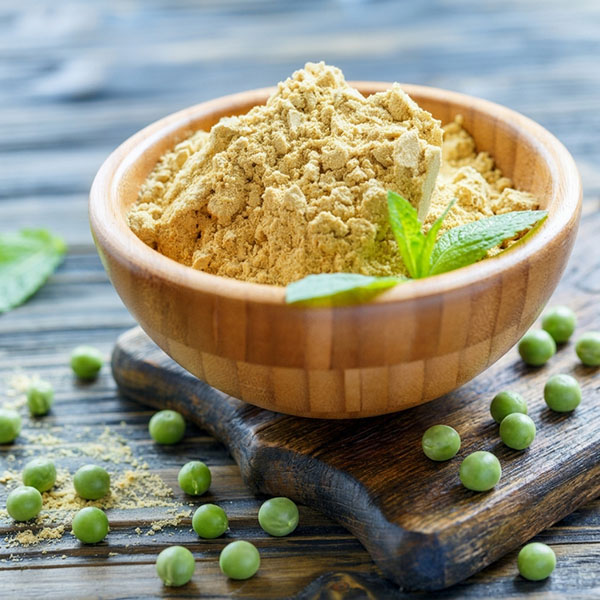
Organic pea peptide powder serves a wide range of industries, from sports nutrition and functional beverages to clean-label food formulations and nutricosmetics. Derived from non-GMO organic peas via enzymatic hydrolysis, it delivers short-chain amino acids that the body absorbs faster than intact proteins.
Its allergen-free, vegan, and USDA/EU Organic-certified profile makes it a preferred ingredient for brands building products around plant-based nutrition. Whether you are formulating protein shakes, energy bars, or skin-support supplements, this ingredient addresses real performance and labeling needs across multiple product categories.
Understanding Organic Pea Peptide Powder and Its Key Benefits
What Sets It Apart from Conventional Pea Protein
Organic pea peptides are not the same as regular pea protein isolate. They are made by breaking down enzymes rather than chemicals, so they consist of short chains of amino acids, usually between 2 and 50. Chemical solvents are not used to make BIOWAY Peptide 85% Pea Protein. This protects the amino acid profile and makes sure the end product is clean and free of waste. An 80% protein powder that melts quickly in a wide pH range is made this way. It can be white or light yellow.
Nutritional Profile That Matters to Formulators
There are a lot of branched-chain amino acids (BCAAs) in the peptide, such as valine, isoleucine, and leucine. It also has all eight essential amino acids. Not only does it not have cholesterol, but it is also naturally low in fat and calories. It's also certified as NOP and EU Organic, BRC, ISO22000, Kosher, Halal, and HACCP. There are claims about performance and regulations that are backed up by this profile. It helps R&D teams compare nitrogen sources from plants.
Safety, Allergens, and Compliance Confidence
Foods that cause allergies, like soy and gluten, are not in this item, so people who have to follow special diets can use it. There is no chance of being exposed to acids during processing because it comes from peas instead of beans that need some oil taken out. More trust is given to brands in the U.S. and Europe that say they use clean labels after pesticide-free products are checked and given organic approval.
Major Industrial Applications of Organic Pea Peptide Powder
Sports Nutrition and Post-Workout Recovery
These small-molecule peptides are quickly absorbed, so they work well in formulas that help you recover after working out. Organic pea peptide is one such ingredient. Peptides, on the other hand, can go straight to the PepT1 transporter system. This makes it faster for amino acids to get to muscle tissue.
People who are vegan and fitness brands that want to reach people who are interested in organic sports nutrition use this ingredient in protein powders, ready-to-drink shakes, and healing pills. The product from BIOWAY lives up to its claims that it builds muscle without soy or dairy.
Functional Beverages and High-Protein Drinks
As a scientist, one of the best things about this peptide form is that it can break down in acidic pH ranges (2–10.0). The hydrolyzed peptide version of pea protein stays fully dissolved, but the regular kind settles to the bottom of juices or bubbly drinks. This means it can be used for:
- •High-protein water and RTD beverages requiring clarity and zero sedimentation
- •Sport drinks and instant drink mixes where texture must remain smooth under high-temperature sterilization
- •Nutritional smoothies and meal-replacement drinks that need both protein density and palatability
As a result, beverage makers like to use pea peptides as an ingredient because they are a plant-based source of protein that can stand up to UHT and retort processing without changing the way the finished product looks or feels. This is a good change for formulators who have had trouble with whole pea protein precipitating or being grainy.
Clean-Label Snacks, Energy Bars, and Baked Goods
Companies that make protein-rich snacks, cookies, or energy bars can start using the clean-label features right away. "Organic pea peptide" can be written on the label instead of an E-number or chemical name. It's easy to add to dry mixes, doesn't add many calories or fat, stays stable while baking, and doesn't clash with other flavors. It has also been added by companies that make baby and pregnant food as a mild, non-allergenic form of protein for people who are sensitive.
Nutricosmetics and Skin-Support Supplements
Peer-reviewed food science journals have published studies that say peptides from plants can help the body make collagen and protect cells from damage. The organic pea peptide from BIOWAY is made to be used in "beauty from within" supplements. Because its molecules are so small, it can be delivered precisely, and the fact that it is organic fits with the clean beauty and ingestible healthcare trend. Companies that make skin-supporting powders or pills to fight aging can now use vegan collagen peptides instead of marine collagen peptides.
How to Choose the Right Organic Pea Peptide Supplier for Your Business
Certification Verification Is Non-Negotiable
You can be sure that any company that makes organic pea peptides is honest if they show proof of all of their certifications, such as USDA NOP, EU Organic, Non-GMO testing, and allergy control. Know what you need before you order a sample. Get a Certificate of Analysis (COA), a full amino acid profile, and molecular weight distribution data. Any brand in a controlled market that doesn't have all of its papers in order could be audited.
Production Capability and Supply Reliability
Mid-sized brands that spend between $100,000 and $1.5 million a year need to be sure of their supply as much as they need to know about price. One of BIOWAY's facilities is more than 50,000 square meters and is GMP-certified. The other is a building in the US that is 3,000 square meters. People in North America will be able to buy things faster because of this. The raw materials come from 100 hectares of organic farms in the Qinghai-Tibet Plateau. There is less chance of organic certification gaps because the upstream supply chain is controlled from top to bottom.
Flavor, Solubility, and Processing Performance Data
When people buy plant-based foods, they often worry about the taste of beany that comes from pea-based foods. The flavor problem is much less of a problem now that BIOWAY has used precise hydrolysis and advanced deodorization. Ask each seller you're interested in for sensory evaluation reports and data on how well the product dissolves in a range of pH levels that are important for your application. With this step alone, sellers who can't make drinks or snacks up to par will be thrown out.
Best Practices for Utilizing Organic Pea Peptide Powder in Product Development
Recommended Usage Levels and Format Compatibility
BIOWAY's organic pea peptide (Pea Protein Peptide 85%) will not go bad if you store it in a cool, dry place for 24 months. It's packed in 10 kg bags. From what the protein claims say, inclusion rates in food and drinks are usually between 5 and 20% of the total formula weight. It is a fine powder that doesn't stick together or bridge, so it can be used in both wet and dry processes.
Pairing with Complementary Plant Proteins
Pea protein naturally has less methionine than other proteins. When the peptide is mixed with organic brown rice protein or organic hemp protein, the balance of amino acids is better. This is very important for meal replacements and sports nutrients. If a brand wants a complete vegan protein matrix, BIOWAY can blend it for them through OEM or private label agreements.
Regulatory and Label Claim Alignment
If you want to make health claims about a recipe, make sure they follow FDA and FTC rules before you finish the recipe. The protein level, plant-based source, and allergen-free status of organic pea peptide are all verified. There needs to be more proof for functional claims that say they help muscles heal or skin stay healthy. If you need help with your compliance review, BIOWAY's expert team can give you data and paperwork to back it up.
Future Trends and Market Outlook for Organic Pea Peptide Powder
Growing Demand in the U.S. Plant-Based Market
Analysts who follow the market for plant-based ingredients say that the pea protein market was worth $175 million in 2022 and will be worth over $400 million by 2030. There is a smaller peptide section, but it is rising faster. This is because high-end goods need plant proteins that are functional and absorb quickly.
Expansion into Pharmaceutical and Clinical Nutrition
Plant-derived peptides are being used more and more in clinical nutrition, formulas that help wounds heal, and items for caring for the old, in addition to food. People who can't handle animal proteins or medical vitamins made with cheese can use this ingredient because it is safe and easy to digest.
ESG and Sustainable Sourcing as Procurement Criteria
When buying ingredients, more and more U.S. and European brands are looking at carbon footprint and being able to track the supply chain. People who buy from BIOWAY's base in the Qinghai-Tibet Plateau can get real data for ESG reports and supplier checks because the company is organically certified and doesn't use GMOs.
Conclusion
Organic pea peptide powder is no longer just a specialty item. It can be used in a lot of different ways, is easily taken, and has a clean approval stack. This makes it useful for companies that make plant-based foods, sports nutrition products, functional drinks, and cosmetics. If you want to buy something, make sure that the technical details, such as solubility, amino acid profile, and taste performance, match what you need for your product. Also, make sure that the company you buy from can prove everything they say.
FAQ
What is the difference between pea protein and pea peptides?
Pea protein is an intact macromolecule, while pea peptides are short amino acid chains (2–50 amino acids) produced through enzymatic hydrolysis. Peptides require less digestive energy and absorb faster through the PepT1 transporter system, making them more effective in time-sensitive applications like post-workout recovery.
Does organic pea peptide powder contain allergens?
No. BIOWAY's Pea Protein Peptide 85% is free from the top 8 allergens, including soy and gluten. It is also pesticide-free and produced without organic solvents.
Can it be used in acidic beverages without precipitation?
Yes. The hydrolyzed structure maintains solubility across a pH range of 2.0 to 10.0, making it suitable for juice-based drinks, RTD formulas, and carbonated beverages where intact proteins would precipitate.
Does it have a beany taste?
The characteristic pea off-flavor is significantly reduced through precision hydrolysis and advanced deodorization processing. Sensory evaluation data is available upon request.
What certifications does BIOWAY's product carry?
NOP & EU Organic, BRC, ISO22000, Kosher, Halal, and HACCP. The facility also holds cGMP, ISO9001, FDA, and FSSC certifications.
Partner with BIOWAY for Certified Organic Pea Peptide Supply
Organic pea peptides are made by Bioway Industrial Group Ltd, a real business. Their 100-hectare certified organic fields and 3,000-square-meter building in the U.S. allow them to ship quickly within the country. They've been making them for more than 15 years. Our technical team is ready to help you reach your formulation goals, whether you need organic pea peptides in bulk, private label or OEM services, or custom amino acid blending. You can email grace@biowaycn.com or visit biowaynutrition.com to ask for samples and forms.
References
1. Gorissen, S. H. M., et al. "Protein Content and Amino Acid Composition of Commercially Available Plant-Based Protein Isolates." Amino Acids, 2018.
2. Lam, A. C. Y., et al. "Pea Protein Isolates: Structure, Extraction, and Functionality." Food Reviews International, 2018.
3. Jeske, S., Zannini, E., & Arendt, E. K. "Evaluation of Physicochemical and Glycaemic Properties of Commercial Plant-Based Milk Alternatives." Plant Foods for Human Nutrition, 2017.
4. Boland, M. "Proteins in Food Processing: Plant-Based Proteins." Woodhead Publishing, 2018.
5. Moughan, P. J., et al. "Digestible Indispensable Amino Acid Score (DIAAS): Recommended Method for Determining Dietary Protein Quality." Food and Nutrition Bulletin, 2020.
6. Rutherfurd, S. M., et al. "Protein Digestibility-Corrected Amino Acid Scores and Digestible Indispensable Amino Acid Scores Differentially Describe Protein Quality in Growing Male Rats." Journal of Nutrition, 2015.
Contact Us
Grace HU (Marketing Manager) grace@biowaycn.com
Carl Cheng ( CEO/Boss ) ceo@biowaycn.com
Website: www.biowaynutrition.com
Post time: Oct-23-2026


